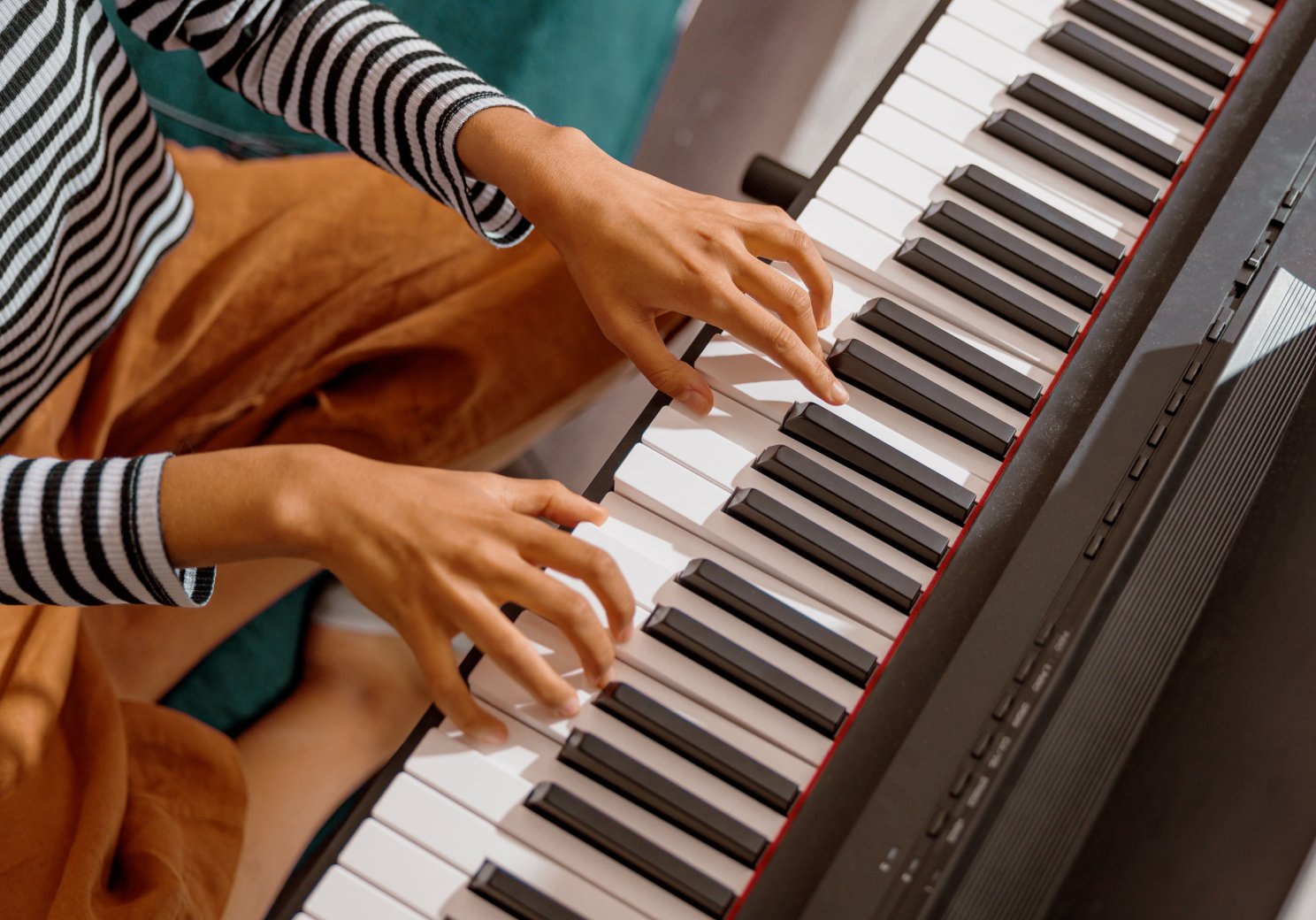
Choosing the right instrument for piano lessons can feel tedious. A beginning piano player is likely to look at a long list of features. However, the issue is that they may not understand what they really need. It all depends on their needs and expectations, space available, and commitment level towards the study.
A keyboard could be helpful for beginners. But it might also impact the development of playing technique. unique structure usually affects it. It is good to have at least some basic knowledge prior to purchasing anything. Take help from platforms like 1on1piano.com.
Start With the Number of Keys
Key count is one of the first features beginners notice. Full-sized pianos feature 88 keys. It allows the musician to play a huge variety of notes. Most keyboards have fewer keys. This is why they are more compact for placing in a room.
Pay Attention to Touch Sensitivity
Touch sensitivity is an essential attribute for someone learning the piano. It enables the piano to react differently when pressed softly or heavily. Softly pressing a key will yield a low-volume tone, and heavily pressing will yield a high-volume tone.
If a beginner wants to learn expressive playing from the get-go, then touch sensitivity is an attribute that they should consider at this time. It is not an added benefit but a fundamental aspect of playing.
Understand Weighted and Unweighted Keys
The keys in an electronic keyboard may vary significantly in their physical characteristics from one keyboard to the next. Some keys will feel light and require minimal pressure. Others will have resistance built in that mimics that of the acoustic piano.
Weighted keys provide practice with the resistance and movements involved in playing the piano. This may be especially helpful for students who ultimately want to play the acoustic piano.
However, that does not mean that the lightweight keys have no utility. They can prove helpful for some casual learners and in some cases where mobility is an issue. It is crucial to select the type of key action according to the intended purpose of learning.
Consider the Sound and Speakers
Good sound helps one enjoy practicing more. You spend a lot of time listening to the same instrument, so bad or poor sound becomes annoying after a while.
Built-in speakers play a significant role in the case of practicing without headphones. Good sound enables one to hear his or her mistakes, dynamics, and changes in the sound volume, but in the beginning, one does not need many sounds and effects.
If the priority is the piano itself, consider whether the piano’s core sounds seem natural and soothing to listen to. Additional sounds can be fun. They must not interfere with the features that facilitate learning.
Do Not Forget the Pedal
The sustain pedal enables the sounds to keep playing even when the keys are released. This feature becomes more and more helpful as the number of compositions increases.
However, the pedal is not everything. The proper position for the instrument and the stability of the chair are essential elements to practice easily without any additional tension.
Think About Space and Portability
Whereas a large instrument offers an extended range of notes, it occupies more space. One needs to think of this factor prior to purchasing an instrument, especially the area where one will play the instrument.
The advantage of the small piano is the ease of carrying around or storing. This factor can be important for those who regularly change rooms or go to lessons.
Ease of portability must not always take priority over the playing aspect of an instrument. To pursue music seriously, select an instrument that suits your technique.
Know When an Upgrade Makes Sense
Not everyone needs the same equipment at every level of playing experience. An individual who is only beginning to learn how to play the piano might not need as much equipment as someone who has already developed some proficiency in playing the piano.
It becomes necessary to get an upgrade when the existing piano no longer allows you to develop your skills further. It is not because there is new equipment available in the market.
The progress in learning will help you make this choice. Should you find your music getting harder, your technique advancing, and that your present instrument no longer fits anymore, then it might be time for a change.
Choose Based on Your Learning Goals
It is not always true that the most expensive keyboard is the best. The best one is the one that caters to your mode of learning.
To play casually, a small keyboard that is touch-sensitive will do the job. To pursue further studies in piano, go with the choice of a bigger keyboard with weighted keys.
The most important thing is to select an instrument that will make your daily practice sessions enjoyable. The hardware is important. But practice is the key to success. The right setup could eliminate all distractions. It will help you concentrate on rhythm, technique, and reading music. Then you can go ahead with enjoying the process of learning piano.
Check the Practical Details
Details may have an impact on how consistently you practice. Ensure that your keys are standard-sized and that your controls are user-friendly. A sturdy stand may help you keep your instrument at a convenient height. A proper seat may also help you with good posture. If the case is that you share your house with other people, a headphone plug-in option may be useful. It is always easier for you to start practicing when everything is set up for you.