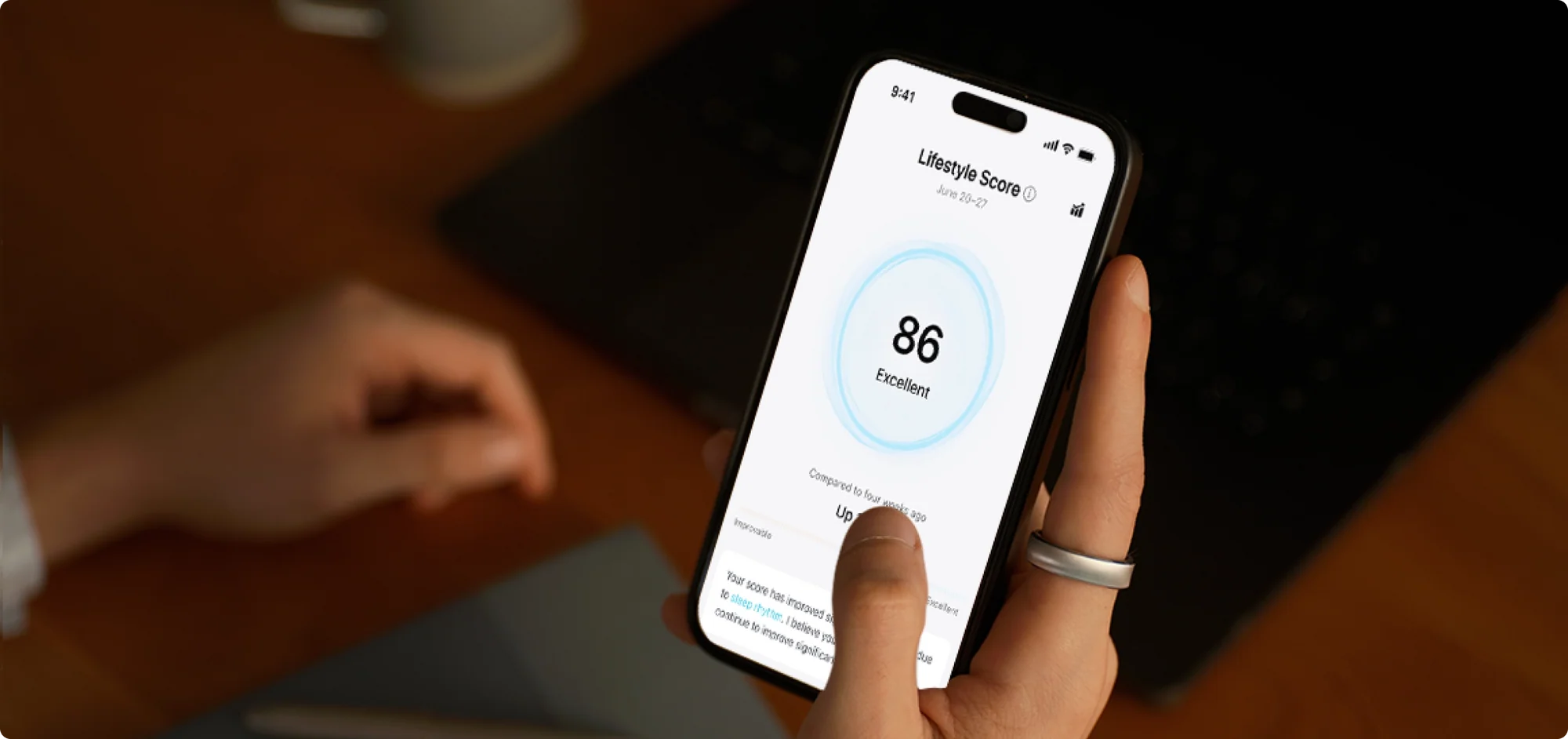
Wearable technology has changed how people monitor their fitness, sleep, and everyday wellness. Smartwatches have been popular for years, but smart rings are becoming an attractive alternative for people who prefer smaller and more discreet devices. Both options offer useful tracking features, yet they differ in design, comfort, functionality, and overall experience.
Choosing the best smart ring depends on your lifestyle and the information you want to track. Meanwhile, understanding the differences in the smart watch vs smart ring comparison can help you decide which wearable offers better value for your needs.
Whether you want to improve your sleep routine, monitor daily activity, or track workouts, this guide explains the important differences between these two wearable devices.
What Is a Smart Ring?
A smart ring is a compact electronic device designed to fit around a finger. It uses miniature sensors to collect selected body measurements and activity information throughout the day and night.
Depending on the model, a smart ring may monitor heart rate, sleep duration, movement, skin temperature trends, and blood oxygen estimates. The information is usually transferred to a smartphone application, where users can review their measurements and wellness trends.
Unlike a smartwatch, a smart ring generally does not have a screen. Its primary purpose is to provide convenient background tracking without requiring constant interaction.
The lightweight design makes it appealing to people who want a simple wearable for everyday wellness monitoring.
What Is a Smartwatch?
A smartwatch is a wearable device designed to provide fitness tracking alongside interactive digital features. Most models include a touchscreen that displays notifications, activity information, applications, and other functions.
Depending on the model, a smartwatch may offer GPS navigation, workout controls, music playback, contactless payments, and phone-related features.
Smartwatches are particularly useful for people who want immediate access to information while exercising or going about their daily activities.
However, their larger size can feel less comfortable for some users, particularly during sleep. Battery life and charging requirements also vary depending on the model and the features being used.
Smart Watch vs Smart Ring: Key Differences
The biggest difference between these devices is their intended purpose. A smartwatch focuses on interactive features and real-time information, while a smart ring generally emphasizes discreet tracking and everyday comfort.
Here is a simple comparison:
| Feature | Smart Ring | Smartwatch |
| Design | Compact and discreet | Larger wrist-worn device |
| Display | Usually no screen | Usually includes a screen |
| Sleep tracking | Available on many models | Available on many models |
| Activity tracking | Basic to advanced, depending on model | Often includes detailed workout tools |
| GPS | Limited or model-dependent | Available on selected models |
| Notifications | Usually limited | Commonly supported |
| Battery life | Varies; some last several days | Varies by model and usage |
| Charging | Often uses a charging dock or case | Usually uses a dedicated charger |
| Best suited for | Passive wellness tracking | Interactive fitness and smart features |
Neither option is automatically better. The right choice depends on which functions you will use most frequently.
Why Choose the Best Smart Ring?
The best smart ring offers a balance of comfort, practical features, battery performance, and reliable software.
One of its biggest advantages is its compact construction. Because the ring does not usually have a display, it can collect information in the background without repeatedly asking for your attention.
Many people also appreciate wearing a ring while sleeping. Its smaller design may feel less intrusive than a watch, although comfort depends on the individual’s preferences and the ring’s fit.
Smart rings can be particularly useful for observing sleep patterns, resting heart rate, daily movement, and other wellness trends.
Before purchasing one, check the available features and whether important insights require a paid subscription.
Smartwatch Advantages for Fitness Enthusiasts
Smartwatches often provide more comprehensive tools for people who exercise regularly.
Depending on the model, they can display workout statistics in real time, track outdoor routes using GPS, and support different exercise modes. Some also connect to wireless headphones and fitness applications.
These capabilities can be useful for runners, cyclists, gym enthusiasts, and athletes who want detailed information during training.
A smartwatch’s screen also makes it easier to check pace, distance, elapsed time, and heart rate while exercising.
For people who want more than passive wellness monitoring, a smartwatch may offer greater flexibility.
Sleep Tracking: Which Device Is Better?
Sleep tracking is an important consideration when comparing a smart ring and a smartwatch.
Both devices may estimate sleep duration, sleep stages, nighttime movement, and heart-rate patterns. The available measurements depend on the specific product.
A smart ring may appeal to people who find wrist-worn devices uncomfortable during the night. However, not everyone finds rings comfortable for sleeping, and the fit must be appropriate for reliable sensor contact.
Smartwatches can provide similar sleep information while offering additional functions during the day.
When evaluating either device, consider the clarity of its sleep reports, battery performance, comfort, and ability to show long-term trends. Consumer sleep measurements are estimates rather than medical diagnoses.
Heart Rate and Health Monitoring
Smart rings and smartwatches can both monitor heart rate using optical sensors. Some models also measure heart-rate variability, while others provide temperature trends or blood oxygen estimates.
The quality of these measurements depends on sensor design, fit, movement, and the specific activity being performed.
Wrist-based devices may offer additional options for monitoring exercise intensity and reviewing workout data. Smart rings can provide useful background information about resting heart rate and everyday wellness patterns.
However, neither device should be treated as a substitute for professional medical equipment. If you experience concerning symptoms, seek medical advice instead of relying on wearable readings.
Comfort, Style, and Everyday Wear
Comfort is one area where personal preference matters more than technical specifications.
A smart ring has a minimalist appearance and can resemble traditional jewelry. It may suit people who do not want a visible electronic display on their wrist.
A smartwatch, by contrast, can function as both a technology accessory and a fitness tool. Different watch faces, straps, and sizes allow users to customize its appearance.
However, rings require careful sizing. A poorly fitted ring may feel uncomfortable or affect sensor contact. Some physical activities, particularly weightlifting or handling heavy equipment, may also make wearing a ring impractical.
Think about when and where you plan to wear your device before choosing between the two.
Battery Life and Charging Costs
Battery life varies considerably across both categories.
Some smart rings can operate for several days before needing a recharge, while smartwatch battery performance ranges from daily charging to multiple days or longer, depending on the model.
Features such as GPS, continuous measurements, and always-on displays can increase power consumption.
Smart rings often use compact charging docks or cases, while smartwatches generally have their own charging accessories.
Compare real-world battery reviews rather than relying entirely on manufacturer estimates. Also check whether the device requires a paid subscription for advanced software features, as this can affect its overall long-term cost.
Smart Ring vs Smartwatch for Daily Wellness
For everyday wellness, either device can be a useful companion.
A smart ring may be suitable for people who mainly want to monitor sleep, activity, and general wellness trends without interacting with a screen.
A smartwatch may be better for someone who wants reminders to move, workout controls, GPS tracking, notifications, and convenient access to smartphone features.
Your daily routine should guide your decision. Someone working at a desk may value discreet tracking, while an outdoor runner might prioritize GPS and real-time performance statistics.
Some users even combine both devices, using a smartwatch during workouts and a ring for overnight tracking. However, this approach adds cost and may result in overlapping measurements.
How to Choose the Right Wearable
Before deciding which device to buy, consider your main priorities.
- Choose a smart ring if you prefer discreet design, passive wellness tracking, and a compact accessory.
- Choose a smartwatch if you need GPS, interactive workout features, notifications, and a display.
- Compare both options if sleep tracking, heart-rate monitoring, and daily activity are your main interests.
- Check the total cost by reviewing the purchase price, subscriptions, accessories, and warranty.
- Prioritize comfort because a wearable is only useful when you can wear it consistently.
Reading independent reviews and checking smartphone compatibility can also help you avoid an unsuitable purchase.
Final Thoughts
The best smart ring and the best smartwatch serve different purposes. A smart ring emphasizes compact design, discreet wear, and background wellness tracking. A smartwatch combines health measurements with interactive features, detailed workout tools, and convenient smartphone access.
In the smart watch vs smart ring comparison, there is no universal winner. Your decision should depend on your lifestyle, comfort preferences, budget, and the features you actually need.
If sleep tracking and discreet daily monitoring are your priorities, a smart ring may be the right choice. If you want advanced exercise tools, GPS, and notifications, a smartwatch may be more suitable.
Ultimately, choose the wearable that supports your routine without making wellness unnecessarily complicated.