Introduction
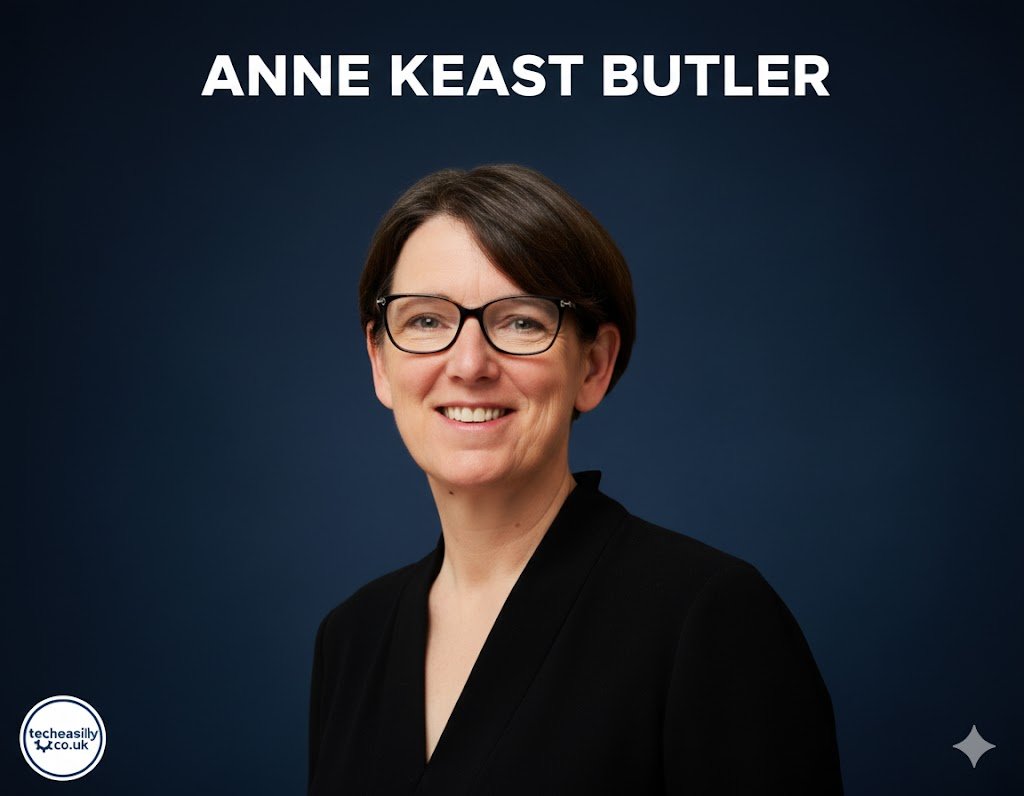
Anne Keast-Butler is a prominent British intelligence leader who made history in 2023 by becoming the first female director of the Government Communications Headquarters (GCHQ), one of the UK’s most critical national security agencies. Her appointment marked a historic milestone, as she took on the responsibility of guiding the UK’s signals intelligence, cybersecurity, and information assurance efforts at a time when global threats continue to evolve rapidly.
Keast-Butler’s rise to this prestigious position is the result of over three decades of experience in intelligence and national security, working in both strategic and operational roles. With her leadership, GCHQ is poised to address the challenges of the digital age, including cybersecurity, digital warfare, and the intersection of technology and national security.
Early Life and Education
Anne Keast-Butler was born in Cambridge, England, where she grew up in a family that valued education and intellectual pursuits. From an early age, Keast-Butler displayed an affinity for problem-solving and analytical thinking, qualities that would later define her career. She pursued mathematics at Merton College, University of Oxford, where her academic excellence helped lay the foundation for her career in intelligence.
Her background in mathematics proved crucial in her work within GCHQ, where technical expertise is key to understanding and responding to the complex and evolving threats to national security. The rigorous training she received at Oxford prepared her to tackle the kinds of analytical challenges that are integral to intelligence work.
Anne Keast-Butler Career in MI5 and GCHQ
MI5: Building a Strong Foundation
Before her appointment at GCHQ, Anne Keast-Butler’s career in intelligence began with a long tenure at MI5, the UK’s domestic security service. She worked in a variety of high-profile positions, including as Deputy Director General of MI5. During this time, she gained extensive experience in counterterrorism, national security, and intelligence operations.
Her work at MI5 focused on the protection of UK citizens from domestic and international threats, including terrorism and espionage. As Deputy Director General, she was responsible for overseeing security operations and strategic intelligence management within the UK, gaining recognition for her ability to lead in high-pressure environments. Keast-Butler’s tenure at MI5 provided her with invaluable insights into the challenges of protecting national security on a day-to-day basis.
GCHQ: A New Era in Leadership
Anne Keast-Butler’s career at GCHQ began when she was appointed as Director of GCHQ in May 2023, becoming the first female leader in the agency’s century-long history. As Director, she is responsible for overseeing the agency’s core functions, including signals intelligence (SIGINT), cybersecurity, and information assurance. GCHQ plays a crucial role in safeguarding the UK’s communications infrastructure, defending against cyber-attacks, and working with other intelligence agencies like MI5 and MI6 to protect national security.
Keast-Butler’s leadership is vital as the agency addresses the increasing threats posed by cybercrime, state-sponsored hacking, and the complex challenges of modern-day digital warfare. Under her guidance, GCHQ has continued to advance its technological capabilities, responding to new and emerging cyber threats in the UK and abroad.
Anne Keast-Butler Leading the Charge in Cybersecurity
As Director of GCHQ, Anne Keast-Butler has placed a strong emphasis on cybersecurity as a core part of the agency’s mission. In an era where digital attacks have the potential to disrupt economies, critical infrastructure, and even democratic processes, GCHQ’s role in defending against cyber threats has never been more crucial.
Keast-Butler’s vision for GCHQ focuses on collaborating with international partners to combat cybercrime and state-sponsored cyberattacks. Under her leadership, the agency has worked tirelessly to bolster the UK’s cyber defenses, ensuring that government agencies, private companies, and individuals are equipped to respond to digital threats.
One of the key challenges she faces is addressing the rise of artificial intelligence (AI) and machine learning in cybersecurity, both as a tool for defense and a potential weapon for malicious actors. As AI-driven attacks become more sophisticated, Keast-Butler is committed to ensuring that GCHQ remains at the cutting edge of cyber defense technology.
Anne Keast-Butler Strategic Leadership and International Influence
In addition to her work leading GCHQ, Keast-Butler is also a prominent figure in international intelligence and cybersecurity cooperation. She frequently represents the UK in discussions with allies such as the United States, Canada, and other NATO members, working to share intelligence and collaborate on defense strategies to combat global cyber threats.
Her role in fostering international partnerships is critical, as the global nature of cybersecurity means that collaboration across borders is essential to effectively counter threats. Keast-Butler’s leadership extends beyond the UK’s borders, ensuring that GCHQ remains a trusted partner in international security efforts.
Advocacy for Diversity and Innovation
One of Anne Keast-Butler’s most important contributions to GCHQ has been her advocacy for diversity and innovation within the agency. As the first woman to lead GCHQ, she has become a symbol of progress and a role model for future generations of women in national security and intelligence. Her leadership style emphasizes the value of diverse perspectives in tackling complex problems.
Keast-Butler is also deeply committed to encouraging innovation at GCHQ. Under her leadership, the agency has made significant investments in emerging technologies such as quantum computing, AI, and data analytics. By embracing these new technologies, GCHQ is positioning itself as a forward-thinking agency that is ready to face the challenges of an increasingly complex digital landscape.
Anne Keast-Butler Personal Life and Public Engagement
Despite her prominent position in the intelligence community, Anne Keast-Butler has largely kept her personal life private. She is married and has three children, balancing her demanding career with family life. While she maintains a professional public profile, she has not shared many personal details outside her career accomplishments.
Keast-Butler is, however, a strong advocate for work-life balance, and she has spoken publicly about the importance of fostering a healthy and supportive work environment at GCHQ. As a leader, she strives to create a culture of inclusivity and support for diverse talent, ensuring that GCHQ remains a place where all employees can thrive.
Legacy and Impact
Anne Keast-Butler’s appointment as the first female Director of GCHQ is a historic achievement that has broken new ground for women in intelligence and national security. Her leadership is helping to shape the future of the UK’s intelligence community, with a focus on cybersecurity, diversity, and global cooperation.
Her career is a testament to the power of dedication, innovation, and collaboration in protecting national security. As the world becomes increasingly interconnected and digital threats continue to evolve, Keast-Butler’s leadership will play a critical role in ensuring the UK’s security infrastructure remains resilient and secure in the years to come.
Conclusion
Anne Keast-Butler’s remarkable career and leadership at GCHQ have already set a powerful precedent for future leaders in national security. As the first woman to head GCHQ, her groundbreaking appointment reflects her outstanding leadership, deep expertise in intelligence, and commitment to tackling the most pressing national security challenges of the 21st century.
Through her vision, GCHQ continues to evolve and adapt to the challenges posed by cyber threats, digital warfare, and global terrorism. Her legacy will inspire future generations of women in intelligence, cybersecurity, and national security fields, showing that innovation, dedication, and leadership can lead to transformative change in even the most traditionally male‑dominated sectors.