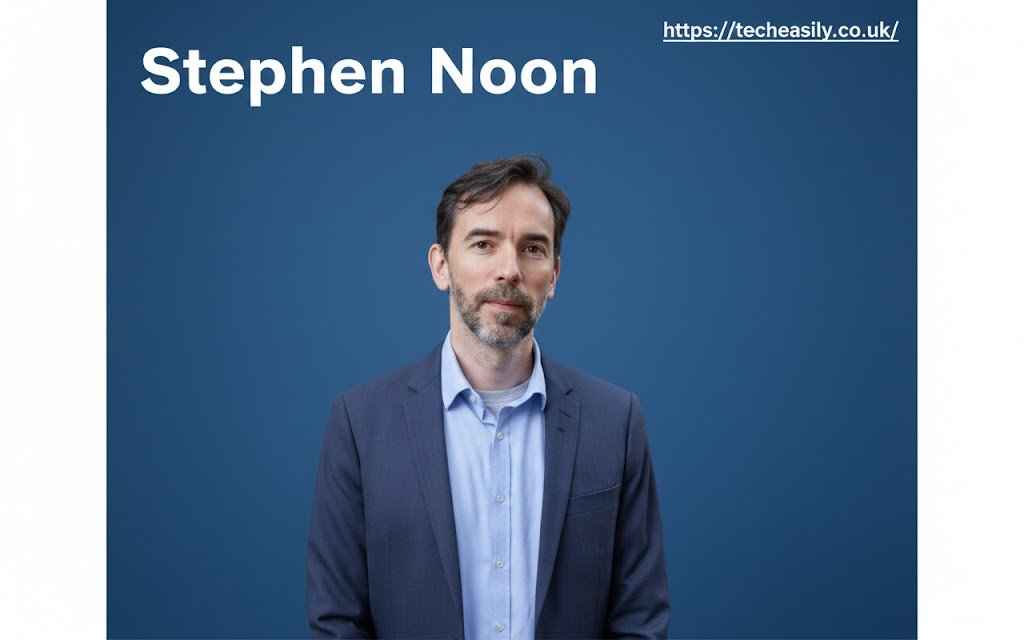
Stephen Noon is a Scottish political strategist, academic researcher, and public intellectual known for his role in the 2014 Scottish independence referendum. As the Chief Strategist for Yes Scotland, he played a pivotal role in the campaign advocating for Scottish independence. Though he is most famous for his strategic leadership in political campaigns, Noon’s influence extends far beyond the referendum — to ethical politics, academic research, and public policy in Scotland.
Early Life and Background
Stephen Noon’s early life is largely private, and many personal details about his upbringing and education are not publicly available. However, it is known that Noon was born and raised in Scotland and became deeply involved in the country’s political landscape at an early age. He demonstrated a keen interest in political strategy, public affairs, and policy formation, which would later define his career.
Stephen Noon Political Career: Chief Strategist for Yes Scotland
The most notable chapter of Noon’s career came in 2012, when he was appointed as the Chief Strategist for Yes Scotland, the campaign for Scottish independence. The Yes Scotland movement aimed to present a united front for those seeking Scotland’s separation from the United Kingdom, culminating in the 2014 independence referendum. Noon’s role as a strategist was central to the way the campaign developed, as he worked to craft the messaging, outreach, and overall strategy of the movement.
As Chief Strategist, Noon was responsible for:
- Crafting key messages that resonated with voters across Scotland.
- Coordinating the efforts of political parties and independent groups that supported Scottish independence.
- Shaping the debates and discussions around Scotland’s future in the event of independence.
- Managing the logistics of such a large, high-profile campaign.
Although the No vote ultimately won in the referendum, the Yes Scotland campaign, under Noon’s leadership, had a significant impact on the political discourse in Scotland. It led to increased debates about Scotland’s place in the UK and fostered a sense of national identity and political engagement that persists today.
Noon’s strategic insights and leadership during this period helped shape the narrative around Scotland’s independence, and his involvement in the referendum cemented his reputation as one of Scotland’s leading political strategists.
Academic Pursuits and Theological Formation
After his work on the independence campaign, Stephen Noon shifted away from frontline politics and turned toward academic and spiritual pursuits. In 2015, Noon began his studies with the Society of Jesus (the Jesuits), a Catholic religious order known for its intellectual rigor and commitment to social justice.
Noon spent several years as a Jesuit novice, immersing himself in theological study, spiritual reflection, and ethical inquiry. This period marked a significant shift in Noon’s life, as he began to integrate his political and ethical views with the insights gained from his spiritual journey. His time with the Jesuits helped him form a unique perspective on political ethics, social responsibility, and the moral dimensions of public life.
Noon’s background in Jesuit thought influenced much of his later work, particularly his approach to public policy and his belief in the need for ethical governance and inclusive politics. His spiritual formation also played a role in shaping his views on dialogue, democracy, and the ways in which political divisions could be bridged through understanding and empathy.
Stephen Noon PhD Research: Political Ethics and Scottish Democracy
Stephen Noon’s commitment to ethical public policy continued with his return to academia. In recent years, Noon embarked on a PhD program at the University of Edinburgh, where he is researching political ethics and the role of democracy in modern Scottish society. His research examines the ways in which Scottish politics has evolved since the establishment of the Scottish Parliament in 1999 and whether the devolution of power has led to a more inclusive and democratic society.
Noon’s research is particularly focused on whether the promises of devolution—such as more democratic accountability, increased civic participation, and a more consensual form of politics—have been fulfilled. He also explores the challenges that remain, particularly regarding polarization and the growing divisions within Scottish society. Noon’s academic work offers a thoughtful critique of Scottish democracy and its evolution since the 1997 referendum that led to the creation of the Scottish Parliament.
Through his PhD research, Noon is making important contributions to political theory and public policy in Scotland, building on his earlier experiences in political strategy.
Stephen Noon Political Commentary and Public Life
Despite stepping back from active political campaigns, Stephen Noon remains an influential public commentator on political matters in Scotland. He frequently writes articles, speaks at public events, and offers his perspectives on a variety of political issues, including Scottish independence, devolution, and the future of Scotland within the UK. Noon’s insights are informed by both his experience as a campaign strategist and his academic research, which allows him to offer a well-rounded perspective on current political events.
Noon has been a strong advocate for inclusive politics, where different political perspectives can engage in meaningful dialogue and where governance is driven by shared values. He critiques political strategies that focus solely on polarization, instead calling for compromise, collaboration, and understanding between different factions of Scottish society.
His work with various think tanks and public policy institutes has made him a sought‑after speaker on issues of governance, constitutional reform, and ethical politics. He remains a key voice in the ongoing debate about Scotland’s future.
Stephen Noon Public Profile and Personal Life
Stephen Noon’s personal life has been kept relatively private, especially compared to his more public‑facing career. He is not known to have actively engaged in social media or public interviews, preferring to maintain a more low‑profile personal life. As of 2025, there is no public information confirming his marital status or whether he is married, though some sources suggest he is not married, with limited personal details made available publicly.
His quiet, thoughtful approach to life contrasts with the often loud and divisive nature of contemporary politics, and he has built his reputation not on seeking the spotlight but on contributing meaningful analysis to the political discourse.
Legacy and Influence
Stephen Noon’s legacy will likely be defined by his role in shaping Scottish political strategy, especially during the 2014 Scottish independence referendum. However, his influence extends far beyond that. Through his work with the Yes Scotland campaign, his academic research on political ethics, and his contributions to public life, Noon has positioned himself as one of Scotland’s leading intellectuals and political thinkers.
His emphasis on ethical politics, democratic inclusion, and dialogue across divides has made him an important voice in discussions about Scotland’s future. As Scotland continues to navigate questions about independence, devolution, and its role within the United Kingdom, Stephen Noon’s thoughtful contributions will undoubtedly continue to shape the debate.
Conclusion
Stephen Noon’s career reflects a blend of pragmatic political strategy, ethical reflection, and intellectual inquiry. From his role in the Yes Scotland campaign to his work as a PhD researcher in political ethics, Noon has made lasting contributions to the political landscape of Scotland. His academic work and his efforts to engage with political debates through a lens of reasoned dialogue and ethical governance continue to influence how Scotland navigates its future — both within the UK and as an evolving democratic entity.
While Noon may not seek the public limelight, his contributions to political strategy and policy discourse have earned him a respected place in Scotland’s ongoing political evolution.