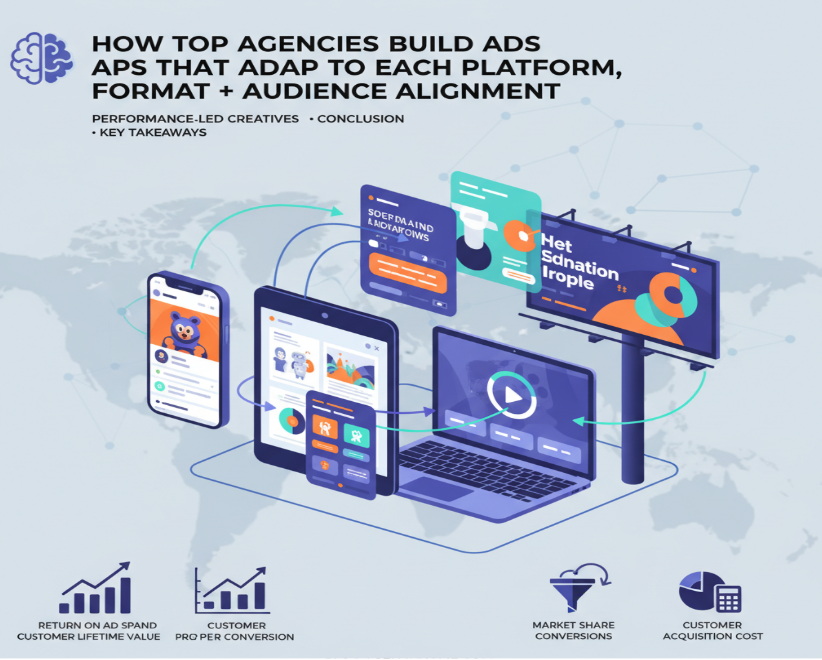
Think about your own online habits for a moment. Do you scroll through TikTok the same way you browse LinkedIn? Or engage with a YouTube ad the same way you do an Instagram story? Probably not. Each platform has its own vibe, its own unspoken rules, and its own unique audience expectations. This isn’t just about screen size; it’s about culture, context, and user intent. And understanding this fundamental truth is what separates the good ad campaigns from the truly great ones.
When it comes to crafting compelling advertising, simply repurposing a single creative across every channel is like showing up to a black-tie gala in swim trunks – it just doesn’t fit. The most effective campaigns, the ones that truly resonate and drive results, are built with platform-specific nuances in mind. This adaptive approach is a hallmark of the top ad agencies today, who recognize that successful advertising isn’t just about what you say, but where and how you say it.
Format + audience alignment

The first step in truly adaptive advertising is recognizing that format isn’t merely a technical specification; it’s a creative opportunity. Every platform, from the ephemeral stories on Instagram to the long-form narratives on YouTube, offers a distinct canvas. A savvy advertiser knows that the physical dimensions and interaction mechanics of a platform profoundly influence how a message should be constructed and consumed. Consider vertical video, which has become dominant on platforms like TikTok and Instagram Reels. Here, quick cuts, authentic feels, and immediate hooks are paramount.
Users are scrolling rapidly, seeking instant gratification and entertainment. Contrast this with LinkedIn, where a more professional, problem-solution narrative, perhaps with a carousel of data points or a thought-leadership video, will likely perform better. The audience on LinkedIn is typically in a different headspace – seeking information, networking, or professional development – so the messaging needs to align with that intent. As insights from Think with Google often highlight, understanding user intent on a platform is crucial for delivering relevant content
A top ad agency doesn’t just shoot a video; they design it for its destination. They ask: Is this for a user passively consuming content, actively searching for a solution, or engaging with friends? This dictates everything from the pacing and soundtrack to the on-screen text and call to action. For instance, an ad on Pinterest might be highly visual and aspirational, focusing on product discovery, while a pre-roll ad on YouTube might leverage storytelling to capture attention before the main content begins. It’s about meeting the audience where they are, both physically on the screen and mentally in their journey.
Performance-led creatives
Beyond initial format and audience alignment, the real magic happens when creative decisions are driven by data. The best agencies don’t just launch campaigns and hope for the best; they launch, learn, and iterate. This performance-led approach means that every ad is essentially a hypothesis, and every impression is a data point. Modern advertising is an ongoing experiment. What works today might need a tweak tomorrow, and what resonates with one segment might fall flat with another
This is where continuous A/B testing and multivariate testing become indispensable. Top agencies create multiple variations of their ads – different headlines, visuals, calls to action, and even opening hooks – and test them rigorously. They monitor metrics like click-through rates, conversion rates, and engagement levels to understand what truly captures attention and drives desired outcomes.
This iterative process isn’t just about minor adjustments; it can lead to significant shifts in creative strategy. If a particular opening scene in a video ad consistently outperforms others, that insight can inform future creative development across various platforms. As the Meta Business Blog frequently emphasizes, creative testing is fundamental to maximizing campaign effectiveness. It’s about being agile, responsive, and willing to let the data lead the way, even if it challenges preconceived notions. This systematic approach allows agencies to build a robust library of high-performing creative assets, ensuring that every ad dollar is spent wisely. They’re not just making ads; they’re optimizing conversations.
Key Takeaways
- Effective advertising requires adapting content to each platform’s unique culture and user behavior, not just resizing.
- Successful campaigns align creative formats and messaging with the audience’s intent and expectations on specific channels.
- Top agencies prioritize data-driven creative decisions, using continuous testing and iteration to optimize ad performance.
- Understanding platform nuances and user psychology is as crucial as the creative itself for driving engagement and conversions.
- Agility and a willingness to learn from performance data are hallmarks of modern, successful advertising strategies.
Conclusion
The digital advertising landscape is a dynamic, ever-evolving ecosystem. What worked yesterday might not work today, and what thrives on one platform could flounder on another. The ability to build ads that truly adapt, both in their initial conception and through ongoing performance optimization, isn’t just a best practice; it’s a necessity. By deeply understanding platform nuances, aligning with audience intent, and relentlessly optimizing based on real-world data, advertisers can move beyond simply broadcasting messages and instead foster genuine, impactful connections with their audiences. The future belongs to the agile, the insightful, and the truly adaptive.