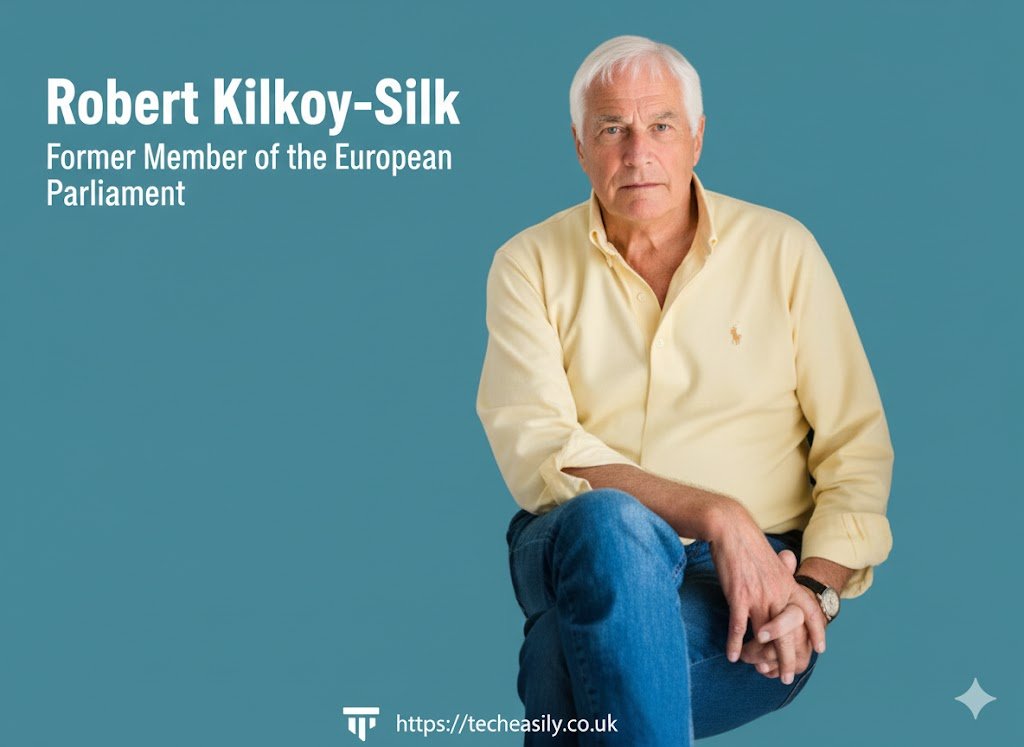
Robert Kilroy-Silk is a prominent British figure known for his television career, political involvement, and controversial opinions. As a former television presenter, Member of Parliament, and Member of the European Parliament, Kilroy-Silk’s career trajectory has been marked by significant public attention, media stardom, and controversy. His career spans decades and touches multiple aspects of British life, from politics to media, where he has made a lasting impact.
Early Life and Education
Born on May 19, 1942, in Birmingham, England, Robert Kilroy-Silk grew up in post-war Britain. Raised by his mother, after his father died in World War II, Kilroy-Silk’s early life was shaped by challenges. His family was not wealthy, but his mother encouraged him to pursue education and independence.
Kilroy-Silk went on to study Politics and Economics at the London School of Economics (LSE), where his academic interest in political theory laid the foundation for his future career in both politics and public commentary. His early experiences would later inform much of his approach to politics, media, and his public persona.
Robert Kilroy-Silk Political Career: Labour MP and Beyond
Kilroy-Silk entered the world of politics in the early 1970s, becoming a member of the Labour Party. In 1974, he was elected as the Member of Parliament (MP) for Ormskirk, and he would go on to serve as the MP for Knowsley North from 1983 until 1986. During this period, Kilroy-Silk became known for his sharp rhetoric and his focus on issues like civil liberties, prison reform, and education.
However, his time in Parliament was short-lived. In 1986, Kilroy-Silk resigned his seat in order to pursue a career in television. The decision was one that would change the trajectory of his career, as he moved away from frontline politics and into the media spotlight.
Robert Kilroy-Silk Television Career: Kilroy and Controversy
In 1986, Kilroy-Silk became the host of the BBC talk show Kilroy, which quickly became a staple of daytime television. The show tackled social issues, politics, and everyday concerns, with Kilroy-Silk’s confrontational style drawing both praise and criticism. His straightforward approach made him a popular host for many viewers, while others criticized his aggressive style and his tendency to stir controversy.
The show ran successfully for nearly two decades before being canceled in 2004, following a highly publicized controversy. Kilroy-Silk had written an inflammatory column in the Sunday Express, which included remarks widely considered racist and derogatory toward Arabs. This led to widespread condemnation, and the BBC ended its relationship with him.
Despite the cancellation of Kilroy, Robert Kilroy-Silk remained an influential figure in the media, continuing to make appearances and write columns for various newspapers. His opinions on immigration, national sovereignty, and European politics kept him in the public eye.
Political Comeback: UKIP and the European Parliament
After his departure from mainstream media, Kilroy-Silk made a political comeback. In 2004, he joined the UK Independence Party (UKIP), a party that advocated for the United Kingdom’s withdrawal from the European Union. His celebrity status gave UKIP a significant boost, and he was elected as a Member of the European Parliament (MEP) for the East Midlands in the 2004 European elections.
Kilroy-Silk’s time in the European Parliament was marked by his outspoken views on European governance and his criticism of the European Union’s role in British affairs. However, his tenure was short-lived. He had a falling out with UKIP’s leadership, and in 2005, he resigned from the party. He briefly founded his own political party, Veritas, but the party failed to gain significant traction, and he left the political spotlight once again.
Controversies and Public Image
Kilroy-Silk’s career has been defined by controversy. From his racist remarks in his Sunday Express column to his Eurosceptic views and frequent clashes with party leaders, his career has been marked by scandal and public criticism. Many of his actions and words were deemed divisive, and his abrasive style made him a polarizing figure in both politics and media.
However, his supporters argue that Kilroy-Silk was a trailblazer who spoke out against political correctness and addressed issues that others were too afraid to touch. His Eurosceptic views, which were once considered fringe, would go on to gain more mainstream support in the years following the rise of the Brexit movement.
Robert Kilroy-Silk Personal Life: Family and Legacy
Kilroy-Silk married Jan Beech in 1963, and they have two children. The couple has largely kept their private life out of the public eye, focusing more on their family than Kilroy-Silk’s political or media career. In recent years, Kilroy-Silk has become a grandfather, and he often speaks about his family with pride.
In terms of his legacy, Kilroy-Silk remains a divisive figure in the UK. His outspoken political views, controversial remarks, and career in media have shaped his public image. While some see him as a champion of free speech and a pioneer of Euroscepticism, others view him as an opportunistic figure whose career was defined by scandal rather than substance.
Where Is Robert Kilroy-Silk Now?
Since stepping away from politics and mainstream television, Robert Kilroy-Silk has largely remained out of the public eye. However, he has occasionally made public appearances to comment on issues such as Brexit and UK politics. While he no longer holds any official political office, Kilroy-Silk remains an influential figure, particularly among those who support Euroscepticism and populist politics.
Kilroy-Silk continues to write and speak about his views on immigration, national sovereignty, and the European Union, though he no longer occupies the central role in UK political discourse that he once did.
Key Facts About Robert Kilroy-Silk
| Aspect | Details |
|---|---|
| Full Name | Robert Michael Kilroy-Silk |
| Born | May 19, 1942, Birmingham, England |
| Education | London School of Economics (LSE) |
| Political Career | MP (Labour) 1974–1986, MEP (UKIP) 2004–2009 |
| Television Career | Host of Kilroy (1986–2004) |
| Family | Married to Jan Beech, two children |
| Controversy | Racist comments, UKIP disputes |
| Legacy | Known for his role in the Eurosceptic movement, TV and media career |
| Current Status | Out of politics, occasional public appearances |
Conclusion
Robert Kilroy-Silk is a complex and controversial figure whose career has spanned politics, media, and public life. Known for his television show, his outspoken political views, and his controversial comments, Kilroy-Silk remains a figure whose legacy will be debated for years to come. Whether admired for his defiance of political correctness or criticized for his inflammatory remarks, Kilroy-Silk’s impact on British politics and media remains undeniable.
Today, while he no longer plays a central role in British politics or media, Kilroy-Silk continues to be a polarizing figure whose opinions and actions have influenced public discourse in the UK.