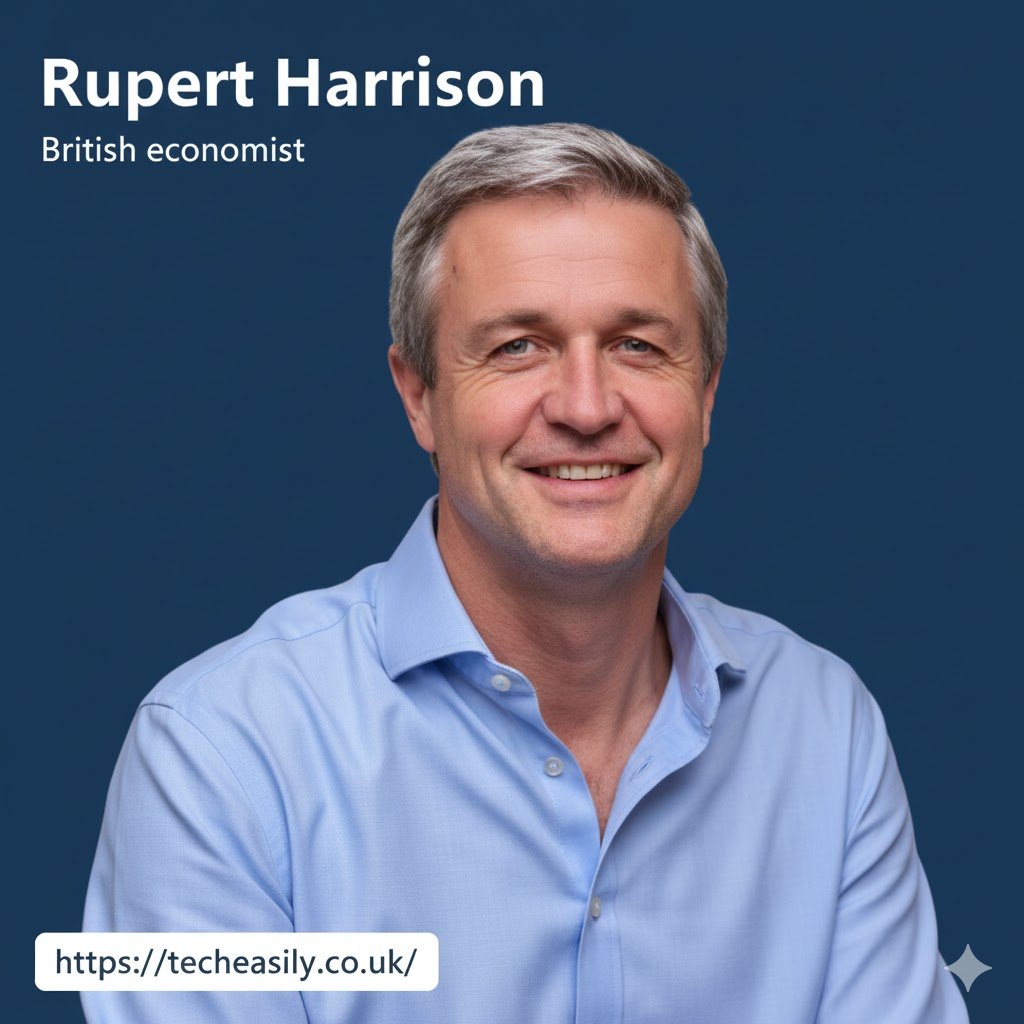
Rupert Harrison is a name well known in the realms of British economics and public policy, having made a significant impact on the UK’s economic strategy during some of the most tumultuous times in modern history. From his work as a trusted adviser to Chancellor George Osborne in the UK government to his transition into global financial markets, Harrison’s journey has been a unique blend of academic rigor, political influence, and economic expertise.
Early Life and Education: Laying the Foundation
Rupert Harrison was born in 1978, into a world far removed from the economic powerhouses of the UK that he would eventually influence. Growing up in Brazil and later moving to the UK, he developed a strong academic foundation that would propel him into the world of economics. After completing his schooling at Eton College, one of the UK’s most prestigious schools, where he served as the Captain of School, Harrison continued his education at Magdalen College, Oxford. It was here that he chose to study Philosophy, Politics, and Economics (PPE), a degree known for producing many of the UK’s leading policymakers. His time at Oxford was marked by academic excellence, and he graduated with first-class honours, a testament to his analytical and academic skills.
Harrison’s thirst for knowledge did not stop there. He went on to pursue a PhD in Economics at University College London (UCL), where he delved into issues surrounding technology, innovation, and the dynamics of economic growth. His research would later inform much of his work in government and finance, giving him a deep understanding of the broader economic forces at play.
Rupert Harrison From Academia to Policy: Shaping the UK’s Economic Future
Rupert Harrison transition from the world of academia to government came in 2006, when he joined the Institute for Fiscal Studies (IFS) as a research economist. The IFS, renowned for its independent and rigorous analysis of fiscal policy, provided the perfect environment for Harrison to hone his understanding of how economic theory could be applied to real-world policy challenges. It was at the IFS that he began to develop the expertise that would later make him a key player in the UK’s economic strategy.
In 2006, Harrison’s career took a pivotal turn when he was appointed Chief Economic Adviser to Shadow Chancellor George Osborne. During this time, he was tasked with providing economic advice to the Conservative Party, focusing on key issues such as tax policy, government spending, and fiscal responsibility. His ability to analyze complex economic data and translate it into actionable policy recommendations quickly earned him the trust of Osborne and other senior figures within the party.
With the Conservative Party’s victory in the 2010 General Election, Harrison’s influence within the UK government grew even more. He was appointed as Chief of Staff to George Osborne, Chancellor of the Exchequer. In this role, Harrison had the unique opportunity to shape some of the most significant fiscal decisions of the post-financial crisis era, including strategies for reducing the national deficit and managing austerity measures.
A Seat at the Table: Influencing the Economic Agenda
As Chief of Staff, Rupert Harrison played an instrumental role in developing the government’s economic policy, often working behind the scenes to advise on key budgetary decisions. His influence was far-reaching, as he was deeply involved in shaping the 2010 Comprehensive Spending Review, which set out the government’s approach to public sector cuts and spending reductions.
Under his guidance, the Treasury focused on reducing the UK’s budget deficit while navigating the economic fallout from the 2008 global financial crisis. This period of fiscal austerity marked a significant turning point in British economic policy, with the government prioritizing deficit reduction over stimulus spending.
Harrison was also involved in overseeing taxation policies and initiatives aimed at stimulating business investment in the UK. His work during this time helped shape the economic framework that would guide the UK through several difficult years, including the decision to implement austerity measures and push for structural reforms in government spending.
Rupert Harrison The Transition to Finance: A New Chapter
After his tenure in government, Rupert Harrison shifted gears and moved into the private financial sector. In 2015, he took on a significant role as Global Macro Strategist at BlackRock, the world’s largest asset management firm. This move signaled Harrison’s ability to translate his economic expertise into financial strategy.
At BlackRock, Harrison worked as part of a team of investment professionals advising on the broader macroeconomic outlook, helping global investors navigate shifting economic landscapes. His deep understanding of fiscal policy, coupled with his analytical skills, made him an invaluable resource in understanding market trends and predicting economic shifts. This experience in the world of global finance allowed him to expand his influence beyond government policy and into the investment world.
The Brexit Era: A New Economic Challenge
One of the defining moments of Harrison’s career came with the onset of Brexit — the UK’s decision to leave the European Union. As a highly respected economist, Harrison became a key voice in the debate, warning of the potential long-term economic consequences of the country’s departure from the EU. While the government’s official stance remained largely supportive of Brexit, Harrison’s analysis highlighted the potential risks of economic slowdown, loss of market access, and disruption to trade flows.
During this period, Harrison’s ability to provide clear, data-backed analysis made him a sought-after commentator in both financial and political circles. His understanding of both domestic and international economic dynamics allowed him to offer unique insights into how Brexit would reshape the UK’s economy, especially in terms of productivity, investment, and trade relationships.
Rupert Harrison Economic Advisory Roles: Continuing Influence
In the years following his departure from government and his time at BlackRock, Rupert Harrison has continued to shape economic policy through various advisory roles. He was appointed to the Economic Advisory Council, which advises the UK Treasury on macroeconomic policy and fiscal strategy. This position allowed him to continue influencing government policy, providing expert analysis and strategic recommendations on how the UK should navigate the post-Brexit economic landscape.
Rupert Harrison also joined PIMCO, one of the world’s largest investment management firms, where he served as Senior Advisor. His role at PIMCO focuses on providing macroeconomic insights and advising on investment strategies in Europe, the Middle East, and Africa. This work further highlights Harrison’s ability to blend his policy expertise with financial acumen, advising some of the world’s leading investors on the economic landscape.
Legacy and Future Influence
Rupert Harrison legacy is still being written, but there is no doubt that his career has been marked by a remarkable ability to influence economic policy at both the national and global levels. From his work as a trusted adviser to George Osborne to his leadership at BlackRock and PIMCO, Harrison has demonstrated a unique ability to navigate complex economic issues and shape policy decisions that impact millions of people.
His influence in government, coupled with his successful transition to the financial world, showcases his versatility and deep understanding of both economic theory and practical policy application. As he continues to advise governments, businesses, and investors, Harrison remains a key figure in shaping the UK’s economic future, particularly as the country faces the ongoing challenges of a post-Brexit world.
Conclusion
Rupert Harrison career is a testament to the power of economic expertise in shaping public policy and guiding financial markets. From his academic beginnings to his high-profile role in government, and later, his work in the global financial sector, Harrison’s influence has been profound. His ability to bridge the gap between economic theory and real-world financial strategy has made him one of the most respected figures in British economics.
Looking ahead, Harrison’s insights will continue to shape economic thought in the UK and beyond, as he remains deeply involved in advising key policymakers, businesses, and investors. His career serves as a powerful reminder of the importance of informed economic leadership in navigating the challenges of today’s complex global economy.