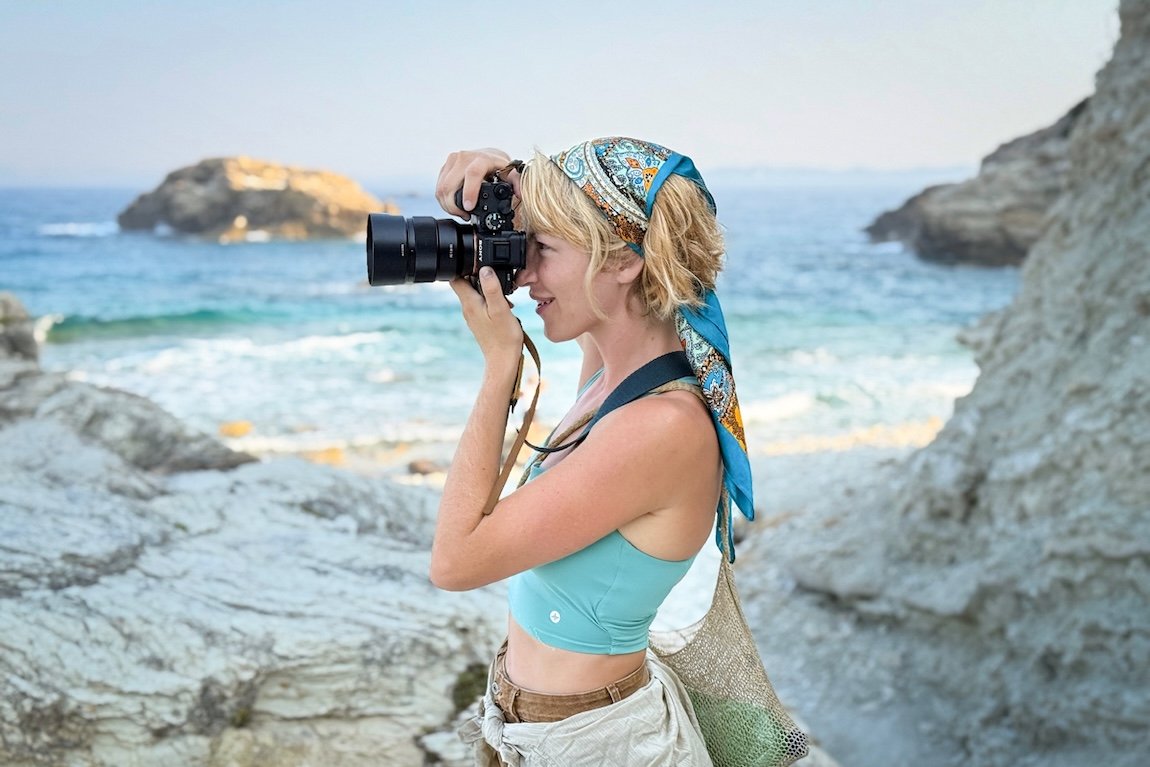
Packing for a trip always comes with one big question for photography lovers: which camera should I bring? You want image quality that does your adventures justice, but you don’t want to haul a brick around narrow streets, mountain trails, or crowded airports. That’s exactly where mirrorless cameras shine – compact, powerful, and built for people who actually move.
But with so many models on the market, “travel-friendly” can mean very different things. For some, it’s all about shaving every gram; for others, it’s about having a weather-sealed body that laughs in the face of dust and drizzle. And if you’ve ever watched your battery die just as the good light hits, you already know why endurance matters just as much as specs.
Choosing the best mirrorless camera for travel means understanding how three core factors – weight, weather-sealing, and battery life – work together for the way you actually shoot.
Why Weight Matters More Than You Think
On paper, an extra 150–300 grams doesn’t sound like much. In real life, after a day of walking, climbing stairs, or navigating public transport with a backpack, you feel every bit of it.
Mirrorless cameras already start with an advantage over most DSLRs, but there’s still a wide range of sizes and weights. A small APS-C body with a compact zoom can slip into a sling bag or jacket pocket and genuinely disappear when you’re not shooting. A larger full-frame body with a fast zoom lens will deliver glorious image quality, but may dominate your carry-on and make you think twice about taking it to dinner after a long day.
The key is to be honest about your own habits. If you’re the kind of traveller who loves wandering cities from sunrise to sunset, hopping on and off public transport, a lighter setup will probably get used far more often. If you’re planning a dedicated photo trip where the camera is the main event, you might happily accept the weight trade-off for higher low-light performance and depth of field control.
Think about total system weight too, not just the camera body. A small body paired with heavy lenses can feel unbalanced and tiring. Ideally, your body and main lens complement each other so you can comfortably shoot one-handed, lift the camera quickly to your eye, and carry it all day without feeling like you’re at the gym.
Weather-Sealing: Insurance for Real-World Travel
In a studio, weather-sealing doesn’t matter. On the road, things are different. Sudden rain showers, sea spray on a boat trip, dust at a desert lookout, or humidity in tropical cities can all make you nervous about bringing out your camera – unless you’ve chosen one built to handle those conditions.
Weather-sealed mirrorless bodies and lenses are designed with gaskets and robust construction that help keep out moisture and dust. They’re not invincible or truly waterproof, but they’re a lot more forgiving of real-world travel. That can be the difference between confidently shooting in light rain at a lookout, and hiding your camera in a bag while the best images pass you by.
If you’re planning:
- Coastal or island trips with sea spray and wind
- Mountain hikes where weather can turn quickly
- Outback or desert travel with dust and sand
- Humid destinations with sudden downpours
it’s worth shortlisting cameras and lenses with at least some level of sealing. Pairing a sealed body with a non-sealed kit lens reduces the overall protection, so consider your lens choices as part of the same decision.
Even if your budget doesn’t stretch to the most rugged professional models, a mid-range mirrorless with basic sealing plus a simple rain cover or dry bag can go a long way toward peace of mind.
Battery Life: The Underrated Travel Spec
Travellers push cameras in ways casual spec sheets don’t always reflect. Long days out, heavy use of the screen for composition, lots of reviewing images, and video clips all eat into battery life.
Mirrorless cameras, by design, use more power than optical-viewfinder DSLRs because they rely on electronic viewfinders and LCD screens. That’s why it’s crucial to look at real-world battery performance, not just the numbers, and plan around it.
A few practical considerations:
- If you love using the rear screen to compose, expect shorter battery life than viewfinder-only shooters.
- Shooting lots of 4K video or time-lapse will drain batteries much faster than stills.
- Cold environments can reduce effective battery capacity, so winter trips may need extra spares.
For travel, a smart baseline is at least two spare batteries for moderate shooting, and three or more if you’ll be out all day without guaranteed access to power. USB-C charging directly into the camera is another underrated feature, letting you top up from a power bank on buses, trains or in cafés.
In other words, don’t just ask “how long does the battery last?” Ask “how easily can I keep this camera powered on the move?”
Balancing the Trade-Offs: There’s No One Perfect Camera
Every travel photographer ends up balancing these factors differently. A minimalist city explorer might prioritise a small body, pancake prime lens and light bag over everything else. A landscape lover chasing sunrise at alpine viewpoints might accept more weight in exchange for weather-sealing and a beefier battery. Someone documenting family trips might pick a mid-sized, comfortable camera with great autofocus and decent sealing that just “gets out of the way.”
That’s why it helps to think in scenarios rather than specs. Picture how you actually travel: the kind of accommodation you book, how often you change locations, whether you rent cars or rely on public transport, how much walking you do, and how comfortable you are carrying gear in busy environments.
When you test or research a camera, imagine those real days: grabbing it quickly from a bag on a crowded tram, shooting in drizzle at a lookout, swapping batteries at lunch, or taking one body and one lens to an evening market. The camera that fits smoothly into those moments is the one you’ll actually use.
Building a Travel Kit Around Your Mirrorless Camera
Once you’ve picked a body, the rest of your travel photography equipment should support that same balance of weight, durability and endurance.
A few carefully chosen lenses can cover most situations without filling your entire carry-on. A small travel tripod, a couple of fast prime lenses, spare batteries, memory cards and a compact cleaning kit are usually enough for most trips. Thoughtful packing often beats bringing everything you own.
Retailers like Diamonds Camera make it easier by grouping travel-friendly options, so you can see which bodies, lenses and accessories are designed with mobility and reliability in mind, rather than piecing it together blindly.
In the end, the “best” mirrorless camera for travel isn’t the one with the longest spec sheet – it’s the one you’re happy to carry, confident to use in real conditions, and able to keep powered up from take-off to touchdown. Get those three pillars right, and you’ll come home with images that actually tell the story of your journey, not just the shots you managed before your shoulders, nerves or battery gave out.