Manufacturing has always been about precision, speed, and consistency. But in today’s digital-first economy, efficiency is no longer driven solely by machines on the factory floor; it’s increasingly powered by software behind the scenes.
From rising operational costs and supply chain disruptions to growing customer demand for faster delivery and higher-quality products, manufacturers face pressure from every direction. Traditional systems and manual processes often struggle to keep up. As a result, more businesses are choosing to hire custom software development agency partners to modernise operations and gain a competitive edge.
This article explores how custom software is transforming manufacturing efficiency, the latest UK and global trends shaping adoption, and why tailored solutions are becoming essential for manufacturers of all sizes.
Why Is Manufacturing Efficiency Such a Big Challenge Today?
Manufacturing efficiency is no longer just about output volume. It’s about doing more with fewer resources while maintaining quality, compliance, and agility.
Some of the most common challenges manufacturers face include:
- Disconnected systems across departments
- Manual data entry and reporting
- Poor visibility into production performance
- Inefficient inventory and supply chain processes
- Difficulty scaling operations as demand grows
Off-the-shelf software can help to a point, but it rarely fits complex manufacturing workflows perfectly. This is where custom software steps in.
What Is Custom Manufacturing Software?
Custom manufacturing software is purpose-built technology designed around a manufacturer’s specific processes, machinery, and goals. Instead of forcing teams to adapt to rigid systems, the software adapts to how the business actually operates.
Examples include:
- Production planning and scheduling systems
- Manufacturing Execution Systems (MES)
- Quality control and compliance platforms
- Predictive maintenance tools
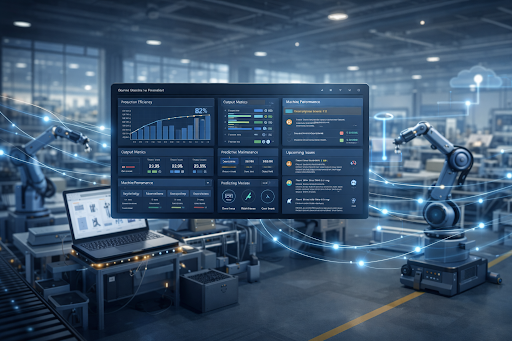
- Real-time analytics and reporting dashboards
Many manufacturers now hire custom software development company partners to build solutions that integrate seamlessly with existing infrastructure.
How Does Custom Software Improve Manufacturing Efficiency?
- Real-Time Visibility Across Operations
One of the biggest efficiency killers in manufacturing is a lack of visibility. When data is siloed, decision-making slows down.
Custom software provides:
- Live production monitoring
- Real-time machine performance data
- Instant alerts for delays or errors
- Centralised dashboards for managers
With accurate, real-time insights, teams can identify bottlenecks and take action before small issues become costly problems.
- Automation of Manual and Repetitive Tasks
Manual processes increase the risk of human error and waste valuable time. Custom software automates tasks such as:
- Data entry and reporting
- Production scheduling
- Inventory updates
- Quality checks and documentation
Automation not only improves efficiency but also frees employees to focus on higher-value work.
- Smarter Production Planning and Scheduling
Production delays often stem from poor planning rather than equipment failure. Custom software allows manufacturers to:
- Align production schedules with demand forecasts
- Optimise machine utilisation
- Reduce downtime and changeover times
- Respond quickly to unexpected changes
This level of flexibility is difficult to achieve with generic systems.
What Role Does Data Play in Manufacturing Efficiency?
Data is the foundation of modern manufacturing. Yet many companies still struggle to turn raw data into actionable insights.
Custom software enables:
- Advanced analytics and performance tracking
- Predictive maintenance based on machine data
- Demand forecasting using historical trends
- Continuous improvement through KPI monitoring
This data-driven approach is a key reason businesses choose software development services UK providers who understand both technology and manufacturing processes.
Latest UK Trends in Custom Manufacturing Software
The UK manufacturing sector is undergoing rapid digital transformation, driven by global competition and evolving regulations.
Industry 4.0 and Smart Manufacturing
UK manufacturers are increasingly adopting Industry 4.0 technologies, such as:
- IoT-enabled machinery
- AI-powered analytics
- Robotics and automation
- Cloud-based manufacturing platforms
Custom software acts as the glue that connects these technologies into a unified ecosystem.
Focus on Compliance and Traceability
Regulatory requirements in manufacturing continue to tighten, especially in industries like pharmaceuticals, automotive, and food production.
Custom software helps by:
- Tracking materials and components end-to-end
- Automating compliance documentation
- Ensuring audit readiness
- Reducing the risk of costly penalties
- Integration With Supply Chains
Supply chain resilience has become a top priority. Custom solutions allow manufacturers to:
- Integrate suppliers and logistics partners
- Monitor inventory levels in real time
- Reduce delays and overstocking
- Improve supplier collaboration
These capabilities are essential in a post-pandemic global market.
Is Custom Software Only for Large Manufacturers?
This is a common myth.
Today, small and mid-sized manufacturers are also choosing to hire custom software development partners. Modern development approaches make it possible to:
- Start with an MVP
- Build modular solutions
- Scale functionality over time
- Control long-term costs
For growing manufacturers, custom software provides flexibility that off-the-shelf tools often lack.
How Manufacturing Software Compares to Other Industries?
Interestingly, many principles used in custom retail software solutions, such as real-time inventory tracking, analytics dashboards, and automation, are now being adapted for manufacturing.
This crossover highlights a broader trend: businesses across industries are prioritising tailored software that fits their exact workflows rather than generic platforms.
What Are the Risks of Not Investing in Custom Software?
Manufacturers that delay digital transformation often face:
- Higher operational costs
- Reduced competitiveness
- Poor scalability
- Increased downtime
- Limited innovation capacity
In contrast, those who invest in custom solutions gain long-term agility and resilience.
How to Choose the Right Custom Software Partner?
Before you hire custom software development agency, it’s important to evaluate potential partners carefully.
Key factors to consider:
- Experience in manufacturing or industrial sectors
- Understanding of UK regulations and standards
- Ability to integrate with existing systems
- Strong focus on security and scalability
- Transparent communication and support
The right partner doesn’t just deliver software; they help shape a long-term digital strategy.
The Future of Manufacturing Efficiency
Looking ahead, custom software will continue to play a central role in:
- AI-driven process optimisation
- Predictive maintenance and zero-downtime factories
- Digital twins and simulation models
- Sustainable and energy-efficient manufacturing
- Fully connected smart factories
Manufacturers who embrace these technologies early will be better positioned to adapt to future challenges.
Conclusion
Manufacturing efficiency is no longer driven solely by machinery and manpower; it’s powered by intelligent, adaptable software. As operations grow more complex and markets become more competitive, custom solutions offer the flexibility and insight manufacturers need to thrive.
For businesses exploring reliable software development services UK, working with an experienced partner can make all the difference. Companies like IIH Global, a leading software development company in the UK, support manufacturers with tailored software solutions designed to improve efficiency, visibility, and long-term growth.