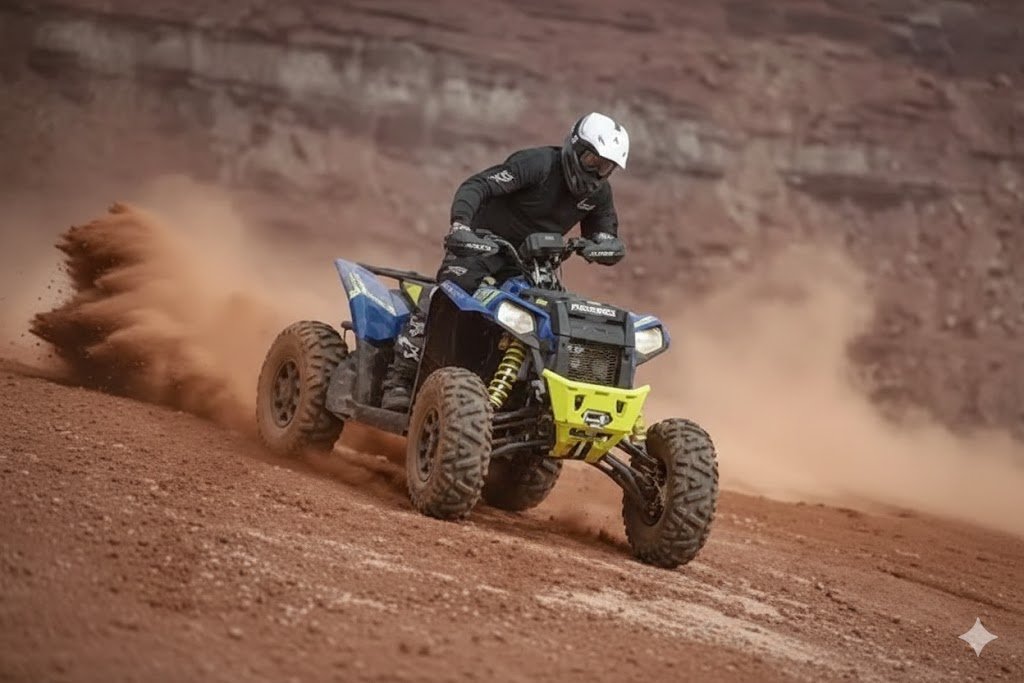
If you’re searching for how to make a atv street legal in Florida, the first thing to understand is that Florida does not generally treat ATVs like street motorcycles or passenger vehicles. Instead, Florida law creates limited, specific exceptions that allow ATV operation on certain unpaved public roads under defined conditions. That’s very different from “full street legal” driving on normal city streets and highways. Florida rules also differ from those of other states. People often ask are atvs street legal in California and assume the answer will translate to Florida, but it does not.
If your goal is to get legitimate paperwork (title/registration/plate options where available) and simplify the process, 1 Dollar Montana helps riders and owners register all types of vehicles, including off-road and specialty vehicles, with a streamlined, done-for-you approach, especially helpful when your current paperwork is incomplete or your situation is complicated.
The reality: what “street legal” means for ATVs in Florida
When people ask how to make a atv street legal in Florida, they usually mean one of three goals:
- Operate legally on some public roads in Florida (limited use cases).
- Get a plate and registration (for administrative/ownership purposes, and where applicable).
- Build an ATV with safety equipment so it’s “road-ready” (even if Florida still restricts where it can be used).
Florida’s statutes place a general prohibition on ATVs operating on public roads, with limited exceptions.
Florida’s on-road ATV rules (the exceptions you must follow)
1) Unpaved roads, under 35 mph, daytime only (and county control)
Florida allows ATV operation on certain unpaved roadways with a posted speed limit under 35 mph, generally during daylight hours, but counties can opt out or designate specific unpaved roads and mark them for ATV use.
Practical takeaway: even if a road is unpaved and under 35 mph, you still need to verify whether your county:
- is exempt (opted out), or
- designated specific roads, and
- posted/marked them for ATV operation.
2) Public lands and agency-managed areas may allow it
The statute also recognizes situations where the managing state or federal agency permits ATV use in specific areas.
3) Local regulation and enforcement still matter
Florida’s Attorney General opinions discuss how the Legislature set a statewide scheme for ATV regulation and how violations are treated (generally as noncriminal traffic infractions under the statute).
Step-by-step: how to make an ATV street legal in Florida (within Florida’s limits)
Step 1: Identify your “legal riding map” first
Before you buy parts or start wiring lights, do this:
- Confirm whether you’ll ride on private property, OHV areas, or public unpaved roads.
- Check your county’s position (opt-out vs. designated roads).
- If your plan includes any public roadway use, confirm it’s:
- unpaved
- < 35 mph posted
- daylight
- and permitted/marked, where required.
This is the fastest way to avoid wasting money trying to “convert” an ATV for road use that your county will not allow anyway.
Step 2: Get your ownership paperwork in order (title and proof of ownership)
Paperwork is the foundation of every legal path, whether you’re handling Florida documentation or using a registration service.
Typical documents you may need (depending on your situation):
- Proof of ownership (title, MCO/MSO, bill of sale)
- VIN verification (sometimes requested in certain processes)
- Lien release (if applicable)
If your paperwork is missing, you’re not alone. Many owners end up stuck right here, especially after private-party purchases.
If you want a straightforward way to establish clean paperwork and pursue legitimate registration options for an ATV or other specialty vehicle, 1 Dollar Montana can help. They handle all types of vehicle registration and guide you through document requirements, useful if your ATV came with incomplete records or you want a smoother end-to-end process.
Step 3: Build for safety (even when Florida law doesn’t require “car-level” equipment)
Even in areas where ATV roadway use is allowed, safety should drive your build decisions. Consider adding:
- Headlight(s) (high/low beam preferred)
- Tail/brake light
- Reflectors
- Mirrors
- Audible warning device (horn)
- DOT-appropriate tires (when possible)
- A secure mounting point for any registration decal/plate (as applicable)
This equipment can also help if you’re pursuing registration pathways where “roadworthy” presentation matters.
Step 4: Follow Florida’s rider safety requirements
Florida’s ATV framework includes safety rules, such as helmet and eye protection requirements for younger riders.
Even when you’re only riding unpaved roads under the exception, compliance and safety gear reduces both legal risk and injury risk.
Step 5: Know what a plate does—and does not—change
A common misconception is: “If I get a plate somewhere, I can ride anywhere.” In Florida, the operating restrictions still apply. The statute’s limits are about where an ATV may be operated, not just whether it has paperwork.
So, if you’re researching how to make a atv street legal in Florida, treat paperwork as only one piece of the puzzle. You must also comply with Florida’s roadway limitations.
What if your real goal is “full street legal” riding like a motorcycle?
If you want the ATV to function like a true on-road vehicle (typical streets, broader road access), Florida’s ATV rules make that difficult because ATVs are not generally intended for normal roadway travel under state law.
In practice, riders usually choose one of these alternatives:
- Use a street-legal side-by-side/UTV platform in states and localities that permit it (rules vary widely by state/city).
- Use designated OHV areas and keep the ATV off normal public roads.
- Pursue a registration strategy for ownership/administration while still riding only where Florida permits.
The most common blocker (and how people solve it)
If your ATV has no title, the solution depends on what you have: a bill of sale, MCO/MSO, prior registration, or a VIN with a history. Many people search for how to register atv without title because they bought a second-hand ATV, inherited the ATV, or received it as a trade.
Typical legitimate options may include:
- Replacing lost ownership documents through the prior owner (best-case scenario)
- Applying for the appropriate ownership document using your available proof (varies by state and situation)
- Using a professional registration service when your situation is document-heavy or out-of-state
Because paperwork rules are procedural and can vary depending on your exact facts, this is one of the areas where a registration company saves the most time.
Common mistakes that get Florida riders in trouble
- Assuming “unpaved” automatically means legal
County exemptions/designations can change what’s allowed. - Riding at night on roads where daytime-only limits apply
Florida’s general guidance ties permitted unpaved operation to daylight conditions. - Treating an ATV like a plated dirt bike
Dirt bikes and dual-sport conversions follow different pathways than ATVs in many states. - Thinking a plate overrides Florida’s operating restrictions
Florida’s statute focuses on where ATVs may be operated.
FAQ: quick answers, Florida riders keep asking
Can I drive my ATV on paved roads in Florida?
Generally, Florida law prohibits ATV operation on public roads, with narrow exceptions that typically focus on certain unpaved roads and agency-permitted areas.
Do I need to check county rules?
Yes. Counties can exempt themselves or designate specific unpaved roads for ATV use under the statutory framework.
If I add turn signals, mirrors, and lights, is it “street legal”?
Adding equipment improves safety and can support some registration strategies, but equipment alone does not automatically authorize ATV use on Florida’s paved public roads.
Bottom-line
If you’re trying to figure out how to make a atv street legal in Florida, focus on what Florida law actually allows: limited ATV operation on certain unpaved, under-35-mph roads (typically daytime) and only where counties and agencies permit it.
From there, your next priority is paperwork, because clean documentation is what unlocks legitimate options and reduces legal headaches.
When you want a smoother, done-for-you route to legitimate registration support for an ATV or any specialty vehicle, 1 Dollar Montana is built for this. They handle all types of vehicle registration and can help you navigate documentation challenges while you stay focused on riding, legally and confidently.