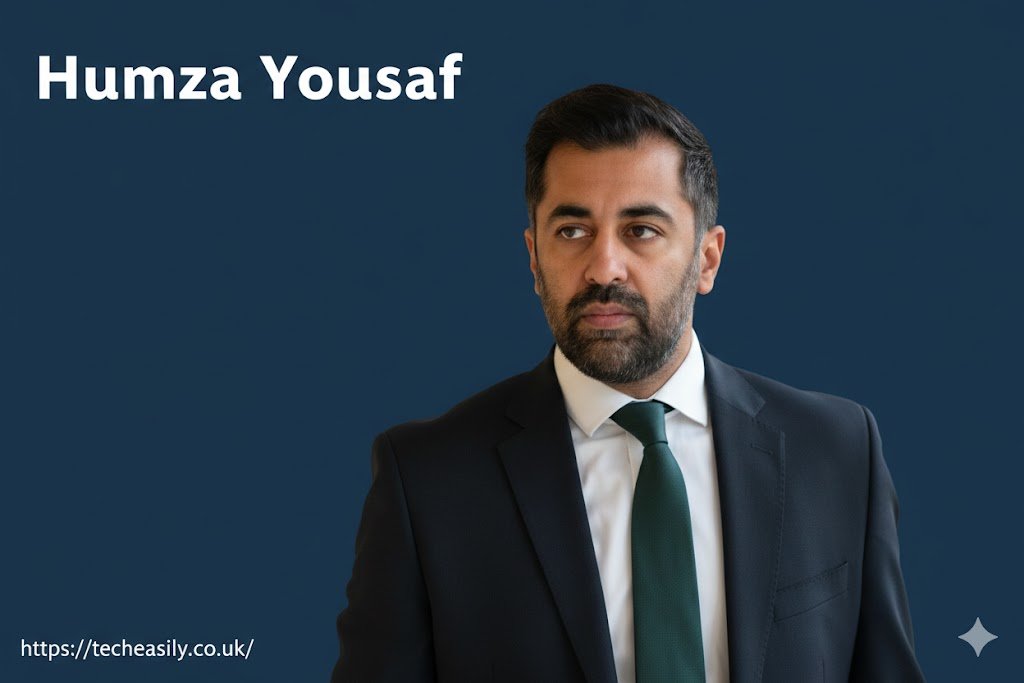
Early Life and Background
Humza Yousaf was born on April 7, 1985, in Rutherglen, Scotland, to a family of immigrants. His father, Mohammad Yousaf, moved to Scotland from Pakistan, while his mother, Shireen Yousaf, hailed from Kenya. As a first‑generation Scottish citizen, Yousaf grew up in a diverse and multicultural environment, which would later play a significant role in shaping his worldview and political outlook.
Growing up in Glasgow, Yousaf attended Hutchesons’ Grammar School, one of the top schools in the city, before going on to study politics at the University of Glasgow. From a young age, he was aware of the issues surrounding social justice, diversity, and equality, which sparked his interest in pursuing a career in public service.
Political Beginnings
Humza Yousaf political career began with a deep involvement in community activism. He became an active member of the Scottish National Party (SNP) and was particularly drawn to the party’s progressive stance on issues like Scottish independence and social equality. Yousaf’s entry into the political arena was also influenced by his time as a parliamentary assistant to Bashir Ahmad, the first Muslim elected to the Scottish Parliament, which allowed him to understand the intricacies of public service and governance.
In 2011, Humza Yousaf was elected as a Member of the Scottish Parliament (MSP) for Glasgow. At the time, he was one of the youngest members of the Scottish Parliament, and his election marked the beginning of a long and storied career in Scottish politics. Over the years, he gained a reputation as a committed public servant, passionate about improving the lives of Scots and advancing the cause of independence for Scotland.
Humza Yousaf Rising Through the Ranks
Humza Yousaf dedication to public service and his impressive work ethic led to his rapid ascent within the SNP. He held a series of key ministerial positions, including:
- Minister for External Affairs and International Development (2012–2014)
- Minister for Transport and the Islands (2016–2018)
- Cabinet Secretary for Justice (2018–2021)
- Cabinet Secretary for Health and Social Care (2021–2023)
During his tenure in various cabinet positions, Yousaf was instrumental in shaping policies related to transport, justice, healthcare, and social services. As the Cabinet Secretary for Justice, he introduced significant reforms to Scotland’s justice system, including the Hate Crime Bill, which aimed to strengthen protections for vulnerable communities.
His tenure as Health Secretary during the latter part of the COVID-19 pandemic was particularly challenging. Yousaf faced criticism and praise for his handling of the public health crisis, balancing the demands of public safety with the strain on the healthcare system. However, his resilience and ability to navigate through difficult times earned him respect among his peers.
Humza Yousaf Becoming First Minister
In March 2023, following the resignation of Nicola Sturgeon, Humza Yousaf won the leadership of the SNP and was subsequently appointed as the First Minister of Scotland. This appointment marked a historic moment, as Yousaf became the first Muslim and the youngest individual to hold this office in Scotland’s history. His leadership was seen as a symbol of progress and inclusion, especially in a country with such a rich history of immigration and multiculturalism.
Humza Yousaf focus as First Minister was on tackling Scotland’s pressing issues, including economic inequality, climate change, and public health. He remained committed to Scottish independence, advocating for a second referendum and rallying the SNP and pro-independence supporters to push for another vote on Scotland’s future.
However, Humza Yousaf time as First Minister was not without its challenges. The SNP faced increasing internal divisions, and opposition parties criticized his leadership on several fronts. Nonetheless, his ability to maintain public support and advocate for progressive policies kept him at the forefront of Scottish politics.
Resignation and the End of an Era
In April 2024, after just over a year in office, Humza Yousaf announced his resignation as First Minister, following mounting pressure from both within his party and from opposition members. The collapse of the SNP’s coalition with the Scottish Greens and a series of internal disagreements contributed to Yousaf’s decision to step down. His resignation made headlines, marking the end of a chapter in Scottish politics.
Humza Yousaf tenure as First Minister may have been short, but it was impactful. He remained a steadfast advocate for the Scottish independence movement and was widely recognized for breaking barriers for minority communities within politics. His leadership will be remembered for its historic significance and the challenges he faced in trying to unite a fragmented political landscape.
Humza Yousaf Personal Life: Family and Faith
Humza Yousaf is married to Nadia El‑Nakla, a psychotherapist and local politician. The couple has two children together. Yousaf’s personal life has often been a subject of public interest, especially as he navigates the balance between his role as a public figure and his duties as a father and husband.
Yousaf is also an advocate for his faith and has often discussed the role of Islam in his life and political career. As Scotland’s first Muslim First Minister, his leadership was seen as groundbreaking not just politically, but also in terms of religious representation.
Public Image and Controversies
Humza Yousaf political career was not without controversy. His handling of the hate crime legislation was met with both support and criticism, particularly from those who felt the bill infringed on free speech. Additionally, his response to the COVID‑19 crisis and subsequent lockdowns drew mixed reactions, with some praising his decisive action and others questioning his approach.
There were also personal controversies, such as his past marriage to Gail Lythgoe, a relationship that ended in divorce in 2016. Yousaf and Lythgoe’s split was a private matter, but it was widely discussed in the media at the time. Despite this, Yousaf continued to focus on his political career, establishing himself as a resilient figure in Scottish politics.
Legacy and Impact
Despite the brevity of his time as First Minister, Humza Yousaf legacy will be remembered for his role in breaking barriers and advocating for progressive change. As the first Muslim to lead Scotland, Yousaf helped broaden the scope of representation in Scottish politics, encouraging others from diverse backgrounds to engage in public service. His advocacy for Scottish independence and his focus on addressing social inequality ensured his place in the political history of Scotland.
Though his resignation marked a turbulent period for the SNP, Yousaf’s contributions to Scottish politics remain significant. His leadership provided new perspectives on the role of faith, diversity, and governance in Scotland, and his legacy will continue to inspire future generations.
Conclusion
Humza Yousaf’s journey through Scottish politics is a testament to resilience, diversity, and commitment to public service. As the first Muslim and youngest First Minister, his time in office was a momentous occasion in Scottish history, though it was also fraught with challenges. His legacy will likely be shaped by his advocacy for independence, his role in advancing social justice, and his contributions to breaking barriers in a rapidly changing political landscape.