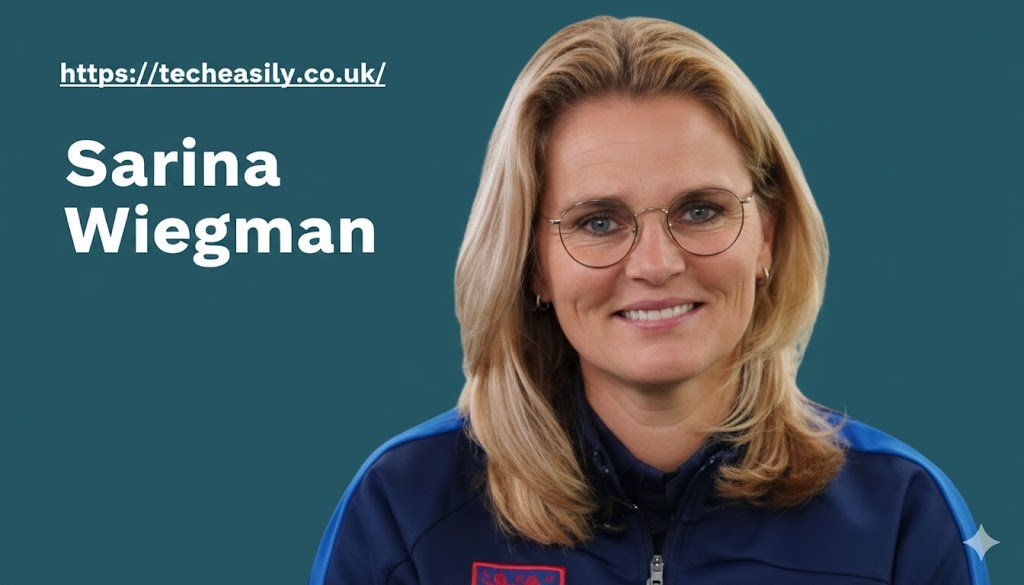
Sarina Wiegman has become one of the most influential figures in women’s football, leading teams to success both as a player and as a manager. From her early playing days in the Netherlands to her current role as the head coach of England’s women’s national football team, Wiegman’s career is a testament to her passion, strategic mindset, and leadership.
Early Life and Playing Career
Born on October 26, 1969, in The Hague, Netherlands, Sarina Wiegman grew up in a time when opportunities for women in football were still limited. Despite these challenges, she developed a deep love for the game, starting her journey in youth football clubs. She played for Ter Leede, a local Dutch club, and also represented her country, earning 104 caps for the Netherlands national team.
As a player, Wiegman primarily played as a midfielder but later transitioned into a defensive role. She captained the national team and was known for her tactical understanding of the game. Her playing days laid the foundation for her later success as a coach.
Wiegman retired from playing in 2003, but her passion for football led her to a successful coaching career, where she would go on to achieve even greater feats.
Sarina Wiegman Transitioning into Coaching
After retiring from football, Sarina Wiegman quickly shifted her focus to coaching. She began her managerial career at the club level, where she coached Ter Leede and later ADO Den Haag, gaining valuable experience. Her early successes with these teams allowed her to make the jump to national team management.
In 2016, she was appointed as the head coach of the Netherlands women’s national football team. This marked the beginning of a truly remarkable journey. Under her guidance, the Dutch team reached new heights.
Success with the Netherlands
Wiegman’s time with the Netherlands was marked by historic achievements. In 2017, she led the team to their first-ever UEFA Women’s Euro victory, cementing her reputation as a world-class manager. The victory was groundbreaking not only for the Netherlands but for the visibility of women’s football worldwide.
In 2019, she guided the team to the FIFA Women’s World Cup final, where the Netherlands finished as runners-up. Wiegman’s tactical prowess and ability to nurture a winning team were on full display, and she was widely celebrated for her contributions to the game.
Sarina Wiegman Leading England’s Lionesses
In 2021, Wiegman made the bold move to coach England’s Lionesses, becoming the team’s first non-British manager. This decision made waves, and many wondered how her approach would compare to the previous management. Wiegman quickly proved that her leadership style — which combined tactical discipline with player empowerment — was the perfect fit for the Lionesses.
Her biggest achievement with England came in 2022 when she led the team to victory at UEFA Women’s Euro 2022, the first-ever European championship win for the Lionesses. The win was celebrated across England, marking a new era for women’s football in the country.
Wiegman’s ability to balance solid defense with explosive attacking play made her an ideal coach for England, and her work with the team has helped raise the profile of women’s football globally.
Sarina Wiegman Personal Life and Family
Sarina Wiegman’s personal life is centered around her family, whom she keeps relatively private. She is married to Marten Glotzbach, a fellow football coach, and together they have two daughters. Her family has been supportive of her career, and Sarina often speaks about the balance she maintains between coaching and spending time with her loved ones.
Despite her high-profile career, Wiegman remains down-to-earth, valuing her family and the simple joys of life.
Legacy and Influence
Wiegman’s influence extends far beyond her record of titles and achievements. She has been a trailblazer for women in football, both as a player and a coach. Her impact can be felt not just in the Netherlands and England but globally, as she continues to inspire young women to pursue careers in football.
Her success with the Netherlands and England shows that women’s football is more than just a growing sport; it is one that can be led by exceptional talent and vision, and Wiegman has proven to be one of the most capable leaders the game has ever seen.
Conclusion
Sarina Wiegman’s journey from a passionate player to one of the world’s most respected football managers is an inspiring one. She has broken barriers, defied expectations, and built championship-winning teams that will forever be remembered in the history of women’s football.
As she continues to lead England’s Lionesses to new heights, there is no doubt that Wiegman’s legacy will be remembered as one of the most significant in women’s football.
Her story proves that success comes from dedication, hard work, and a relentless desire to improve — qualities that make Sarina Wiegman not only an excellent coach but a true pioneer in the world of football.