Early Life and Background
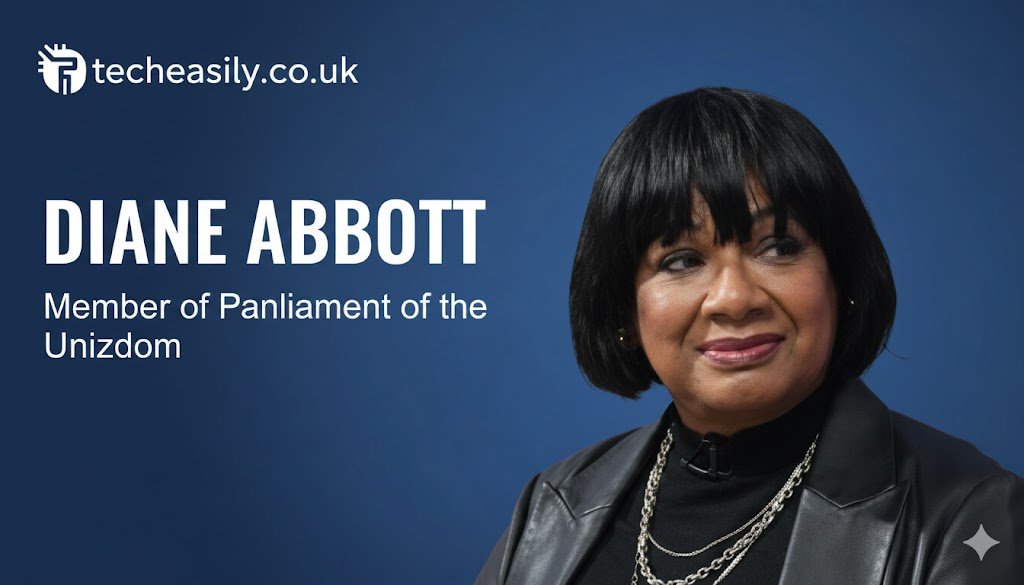
Diane Julie Abbott was born on 27 September 1953 in Paddington, London, to Jamaican immigrant parents. Her father worked as a welder, and her mother was a nurse. Both of her parents left school at the age of 14, marking the beginning of Diane’s unique journey from a working-class background to a prominent political career. She attended Harrow County School for Girls, a grammar school, before pursuing a History degree at Newnham College, Cambridge. Abbott’s upbringing in a family that emphasized hard work and education shaped her lifelong commitment to public service and social justice.
Diane Abbott is of Jamaican heritage and is often recognized as one of the first trailblazers for Black representation in the British political landscape. Her background has made her a strong advocate for racial equality, civil rights, and representation for marginalized communities in the UK.
Diane Abbott Age and Nationality
As of 2025, Diane Abbott is 72 years old. She is British by nationality, born in England, and is of Jamaican descent, representing a significant aspect of the UK’s Caribbean heritage in the political sphere.
Career Beginnings
After completing her education at Cambridge, Abbott began her professional career in the UK Home Office as a trainee (1976–1978). She later moved into roles such as a Race Relations Officer at the National Council for Civil Liberties (1978–1980), and a researcher for Thames Television. Her experience in media, race relations, and public service laid a foundation for her entry into politics.
In 1987, Abbott made history by becoming the first Black woman elected to the UK Parliament. She was elected as the Member of Parliament (MP) for Hackney North & Stoke Newington, where she has continued to serve since then. Abbott’s election was a historic moment for British politics, as she shattered barriers in a field predominantly occupied by white men.
Diane Abbott Personal Life: Family, Spouse, and Children
Diane Abbott married David P. Ayensu-Thompson, a Ghanaian architect, in 1991, but the marriage ended in divorce in 1993. Together, they had one son, James Abbott-Thompson, who was born in October 1991. Diane Abbott has faced significant media scrutiny regarding her personal life, especially concerning her son. In recent years, James has faced legal challenges, including convictions that led to a hospital order rather than traditional jail time.
Despite personal and family challenges, Abbott has remained focused on her political career, championing social justice, equality, and civil rights.
Political Career and Achievements
Abbott’s career in Parliament has been marked by several milestones. She served as the Shadow Secretary of State for International Development (2015–2016), Shadow Health Secretary (2016), and Shadow Home Secretary (2016–2020). Abbott’s stances on various political issues have made her a prominent voice in debates on race, civil rights, social justice, and education.
She is a vocal opponent of austerity and has advocated for the protection of public services. Abbott has also been a strong advocate for anti-racism and anti-colonialism, positioning herself as a key figure in discussions on Britain’s colonial past and its ongoing impact on racial and social inequalities.
Her work on race and ethnicity is perhaps her most defining feature. As the first Black woman in Parliament, she used her position to amplify voices from underrepresented communities and to bring attention to systemic racism in the UK. Her contributions to policy and social justice have solidified her as a key figure in shaping modern British political discourse.
Abbott’s career has not been without its controversies. She has faced criticism for comments made in interviews and public statements, including the infamous 2023 incident when she was suspended from the Labour Party for her remarks about race. However, despite these challenges, she remains an influential figure in UK politics.
Health, Illness, and Personal Struggles
In terms of health, Abbott has publicly disclosed her battle with type 2 diabetes since 2015. Additionally, some public appearances have raised questions about her health, particularly due to visible shaking, which has led to speculation about potential neurological conditions, though no formal diagnosis has been made public. Abbott’s health has been a point of concern among her constituents and the media, but she has continued to serve in Parliament despite these challenges.
Her shaking during parliamentary debates has garnered attention, and there has been speculation about whether it is linked to conditions like Parkinson’s disease, though Abbott has not confirmed any such diagnosis.
Diane Abbott Net Worth and Financial Details
Diane Abbott’s net worth is not precisely documented, but estimates suggest she has a net worth of between £1 million to £3 million as of 2025. Her earnings come from her salary as an MP, speaking engagements, book royalties, and media appearances. The average salary of a Member of Parliament in the UK is around £87,000 per year, but Abbott, as a long-serving MP with additional roles in the Shadow Cabinet, likely receives more due to her positions in the Labour Party. Her book and speaking engagements also contribute to her financial standing.
Religion and Personal Beliefs
Diane Abbott’s religious affiliation has not been prominently discussed in the media or in interviews, and it appears that she has not publicly identified with any particular religion. Her work, however, has always been guided by strong principles of equality, justice, and fairness, advocating for the rights of marginalized communities in the UK.
Legacy and Impact
Diane Abbott’s impact on British politics is undeniable. She has broken numerous barriers for Black women and other minorities in political spheres, and her legacy as a fighter for equality and social justice continues to inspire generations of leaders. Her commitment to anti-racism, civil rights, and equality in education and health has shaped the way policies are developed in the UK. Abbott’s role as an advocate for Black Britons and other marginalized communities continues to position her as a significant figure in modern British politics.
She is also a prominent voice in ongoing debates about colonial history, race relations, and social justice. Her influence is not limited to her constituency of Hackney; her work has reverberated across the country and continues to inspire social change and reform.
Conclusion
Diane Abbott is a trailblazer who has not only made history as the first Black woman MP in the UK but has also continued to serve as a tireless advocate for racial equality and social justice throughout her political career. Her personal struggles, health challenges, and public controversies have only added to her multifaceted legacy. She remains an influential and enduring figure in British politics, continually pushing for the representation and rights of underrepresented communities.
As an MP for over 35 years, her contributions to political discourse will continue to be felt, and her status as a significant figure in UK politics remains unchallenged. Whether advocating for the rights of minorities, championing public services, or fighting for social justice, Diane Abbott’s legacy as a political leader and trailblazer is secure.