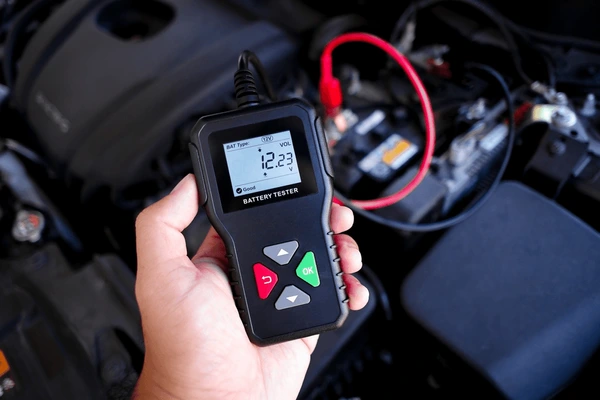
In the quiet hum of a server room or the sterile corridors of a hospital, there is a silent expectation that the power will never truly go out. We build our modern infrastructure on the assumption of continuity, relying on massive banks of lead-acid or lithium cells to bridge the gap between a grid failure and a generator kick-in. Yet, too often, the only time we discover a fault in these systems is when they are actually needed—and by then, it is already too late.
The difference between a seamless transition and a catastrophic blackout usually comes down to the quality of your maintenance regime. Using the right battery testing equipment is the only way to transform that “hope” into a verifiable guarantee. To ensure your backup power is truly reliable, you have to move beyond simple voltage checks and look deep into the chemical health of every single unit.
Why Basic Voltage Checks Are a Dangerous Trap
For years, the standard way to check a battery was to touch the terminals with a basic multimeter. If the screen showed 12.6 volts, the battery was deemed healthy. However, this is a dangerous oversimplification.
Voltage is merely a measure of potential; it doesn’t tell you how much energy the battery can actually deliver when the lights go out. A battery can show a perfect “surface charge” while having so much internal resistance that it would collapse the moment a real load is applied.
This is why professional battery testing equipment is necessary. These tools are designed to look past the surface voltage and analyze the internal state of the plates and electrolyte. Without this depth of insight, you are essentially flying blind, relying on a system that might look strong on paper but lacks the stamina to perform in a crisis.
Understanding the Role of Battery Load Testing Equipment
When the power fails, your backup system doesn’t just sit there; it has to work, and it has to work hard. To simulate this reality without actually crashing your system, you need battery load testing equipment. This specific category of tools places a controlled, artificial demand on the battery, mimicking the draw of your actual hardware.
The Science of the Discharge Test
A true load test is the ultimate “moment of truth.” It measures the voltage drop over time as current is pulled from the cell. If the voltage plunges instantly, you know the battery is compromised. The beauty of modern battery load testing equipment is that it can perform these checks without stressing the battery to the point of damage.
High-end units use impedance or conductance testing to calculate the load capacity in seconds, providing a clear picture of the State of Health (SOH) without the heat and risk associated with old-fashioned “toaster” style testers.
The Precision of Battery Cell Testing Equipment
In large-scale backup systems, batteries are rarely used in isolation. They are connected in long strings to provide the necessary voltage. If one single cell in a string of forty begins to fail, it can drag down the performance of the entire group—or worse, cause the charger to overcompensate and cook the healthy cells.
This is where battery cell testing equipment becomes a vital part of the toolkit. These handheld devices allow technicians to test individual cells while they are still in service.
- Internal Resistance Monitoring: As a cell ages, its internal resistance increases. By tracking this over time, you can predict a failure months before it happens.
- Consistency Mapping: If one cell shows significantly different impedance than its neighbors, it’s a red flag that the string is unbalanced.
- Inter-cell Connection Checks: Sometimes the battery is fine, but the bolt connecting it to the next one is loose or corroded. Specialized battery cell testing equipment can detect these micro-resistance points that lead to heat and failure.
Establishing a Proactive Maintenance Schedule
Owning the best battery testing equipment in the world won’t help if it stays in the box. Reliability is built on data trends, not one-off snapshots. To get the most out of your hardware, you should establish a routine that mirrors the intensity of your operational needs.
Quarterly vs. Annual Diagnostics
For most commercial facilities, a quarterly check is the sweet spot. During these sessions, you should use your battery testing equipment to record the voltage and internal resistance of every cell. This creates a baseline. When you look at the data a year later, you aren’t just looking for “bad” cells; you are looking for cells that are degrading faster than the others. That downward curve is your early warning signal.
The Integration of Smart Monitoring
In 2026, the line between manual testing and automated monitoring is blurring. Some facilities now use permanent battery testing equipment that stays hooked up 24/7. These systems send alerts directly to your phone if a cell’s temperature spikes or its voltage dips. While these are more expensive upfront, they eliminate the “human error” factor and provide the peace of mind that comes with constant oversight.
Safety First: Protecting the Technician and the Hardware
Working with high-capacity backup systems is inherently risky. A short circuit on a large battery bank isn’t just a spark; it’s an explosion. When selecting your battery testing equipment, you must prioritize safety features as much as accuracy.
Look for tools that offer reverse polarity protection and spark-proof connections. Furthermore, ensure your battery testing equipment is rated for the specific chemistry you are using. Lithium-ion batteries require different algorithms than lead-acid or NiCd. Using the wrong settings can lead to false positives—telling you a battery is healthy when it’s actually on the verge of a thermal event.
The Hidden Cost of Inadequate Testing
Why do some organizations hesitate to invest in high-quality battery testing equipment? Usually, it’s the upfront price. However, the cost of a failed backup system during a surge or a blackout is infinitely higher. Think about the data lost in a server crash, the spoiled inventory in a cold storage facility, or the safety risks in a medical clinic.
When you use battery testing equipment regularly, you move from “reactive” maintenance to “predictive” maintenance. You stop replacing batteries because they are old, and you start replacing them because the data shows they are actually failing. This often extends the life of your battery bank by years, as you aren’t tossing out perfectly good cells just because of a calendar date.
Conclusion: Making the Data Work for You
Reliable backup power isn’t an accident; it’s a managed outcome. By integrating battery cell testing equipment and battery load testing equipment into your standard operating procedures, you take control of your facility’s resilience. You no longer have to wonder if the batteries will hold up when the grid goes dark. You will have the data, the trends, and the proof right in front of you.
In the end, the goal of using battery testing equipment is to ensure that the silent sentinels in your basement or server room are always ready for their one big moment. Investing in the right tools and a disciplined testing schedule is the only way to ensure that when the lights flicker, your operation doesn’t miss a beat.
Would you like me to help you create a customized maintenance checklist for your specific battery chemistry, or perhaps research the top-rated battery testing equipment brands currently dominating the professional market in 2026?