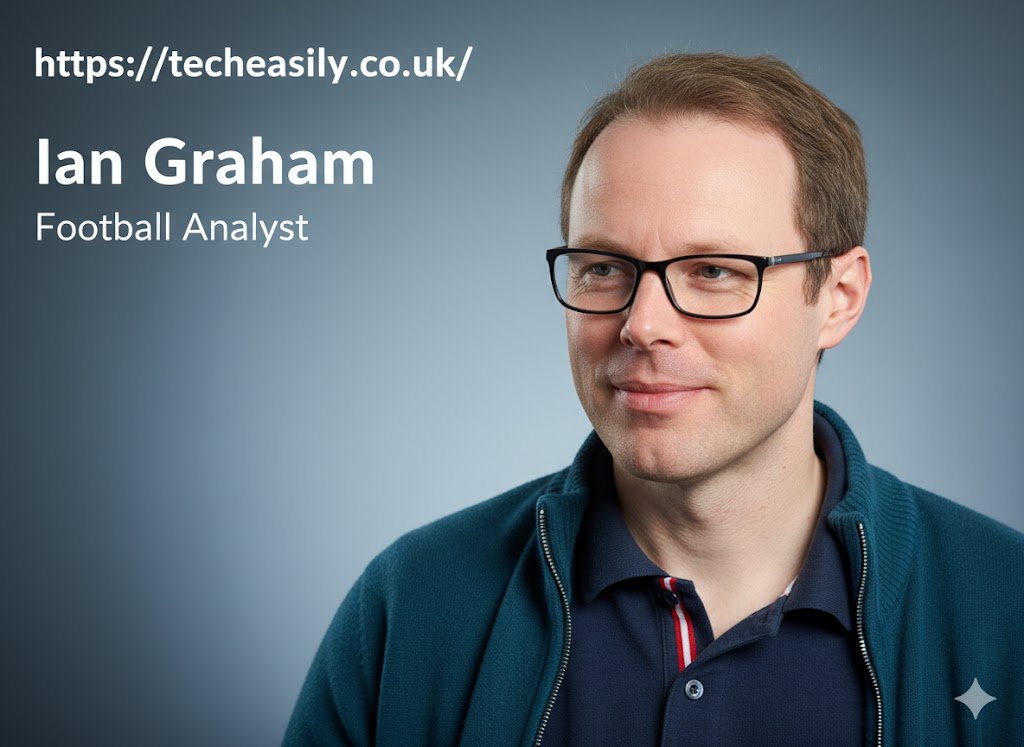
Ian Graham is a name that resonates within the football world, especially when discussing the evolution of data analytics and its profound impact on the sport. A man whose work has shaped how modern football clubs use statistics and data-driven insights for tactical decision-making, player recruitment, and performance analysis, Ian Graham’s contributions are vast. From his academic background to his pivotal role at Liverpool FC and beyond, his career exemplifies the power of data in sports.
Early Life and Education
Ian Graham journey to becoming a leader in football analytics started in the world of academia. He pursued Physics at Cardiff University, where he earned a Master’s degree in Physics (MPhys), before advancing to Cambridge University, where he earned a PhD in Physics. His education gave him a solid foundation in scientific inquiry, data analysis, and statistical modeling—skills that would later become central to his work in football. Unlike many who transition from a sports background, Graham’s scientific approach to problem-solving was rooted in rigorous quantitative analysis, which would become a hallmark of his career.
This academic approach set him apart in the football world, where the art of scouting, recruitment, and tactical analysis had long relied on intuition and traditional methods. Graham’s interest in applying his analytical mindset to football led him to a career that would ultimately reshape how football clubs make decisions.
Ian Graham Career Beginnings: Decision Technology and Football Analytics
Before entering the football world, Ian Graham worked at Decision Technology, a consulting firm where he headed the company’s football research division. This was an early introduction to the intersection of data science and sport. His role at Decision Technology involved conducting football-related analytics, working with teams, clubs, and even bookmakers to improve predictions, performance evaluations, and recruitment strategies. This early exposure to football analytics helped him hone his skills and begin thinking about how data could be used not just to predict results, but to influence the very decisions that clubs made about players, teams, and strategies.
Ian Graham Revolutionizing Football at Liverpool FC
In 2012, Ian Graham joined Liverpool FC as the Director of Research, a role that would turn him into one of the key figures in football’s data revolution. Under new ownership by Fenway Sports Group, Liverpool was keen to modernize its operations, and Graham was tasked with building the club’s first in-house research and analytics department.
What followed was a complete overhaul of how the club viewed and utilized data. Graham’s vision was to move beyond the traditional scouting models that were based on instinct and historical performance, instead using data to provide a more comprehensive view of a player’s abilities, potential, and fit within a team.
Under his leadership, Liverpool’s analytics team developed innovative models, including possession-value models, which measured the value of every action a player made on the pitch, such as passes, dribbles, and tackles, and how those actions contributed to the team’s overall chances of scoring. This data-driven approach allowed the club to make smarter, evidence-based decisions when it came to recruitment and tactics. The impact of this shift was felt across the club’s operations, from tactical planning in match preparation to key player acquisitions.
In fact, Graham’s department played a key role in the recruitment of some of Liverpool’s most successful signings in the past decade. Players like Mohamed Salah, Sadio Mané, and Virgil van Dijk were brought to the club with the help of detailed data models that evaluated their potential not just from a performance perspective but also in terms of their suitability to Klopp’s tactical system. These players would go on to form the backbone of Liverpool’s success in the 2010s and 2020s, with the team winning the Premier League (2020), Champions League (2019), and other major honors during his time at the club.
The Book: ‘How to Win the Premier League’
In 2024, Ian Graham took his experiences and insights from Liverpool FC and penned a book titled “How to Win the Premier League: The Inside Story of Football’s Data Revolution.” The book delves into the specifics of how Liverpool used data analytics to achieve footballing success. It provides an inside look at the analytics department, the methodologies used, and how those statistical insights played a pivotal role in the team’s tactics, player recruitment, and success on the field.
Graham’s book serves as a guide to the evolving role of data in sports, detailing how football clubs are moving away from relying solely on intuition and traditional scouting and toward a more methodical, data-driven approach. The book also offers readers a deeper understanding of football metrics, such as expected goals (xG) and player value metrics, which have become standard in the modern game.
The publication of “How to Win the Premier League” made Graham a prominent voice in sports analytics, giving him a platform to advocate for the importance of data in decision-making and further cementing his reputation as one of football’s most influential figures.
Ian Graham Ludonautics: The Next Chapter
After leaving Liverpool FC in 2023, Ian Graham founded Ludonautics, a consultancy that specializes in data analytics for sports, particularly football. The company provides services such as match prediction models, player performance analysis, and team strategy optimization. Ludonautics is designed to offer high-level analytical expertise to a wider range of clients, from football clubs to media outlets and sports investors, making it easier for teams outside the top tier of football to benefit from the data revolution Graham helped create at Liverpool.
Ludonautics has the potential to make an even broader impact on the world of football, democratizing access to the kinds of data that were once only available to the elite clubs. By providing clubs with the tools to assess talent, predict match outcomes, and optimize performance, Graham’s work through Ludonautics continues to help transform football on a global scale.
Current Work: Expanding Influence & Impact
Today, Ian Graham continues to lead Ludonautics, where he works to make analytics more accessible to clubs of all sizes. His consultancy work extends beyond just football clubs; it also includes providing services to sports investors, media companies, and other organizations that need to understand the intricacies of performance data and prediction models.
Additionally, Graham remains a prominent thought leader, frequently speaking at conferences, podcasts, and sports analytics events. His expertise is sought after not only in football but also in broader sports industries, as the application of data analytics is increasingly becoming an integral part of competitive sports strategy worldwide.
Impact and Legacy
Ian Graham’s impact on the football world is profound. Through his work at Liverpool and now Ludonautics, he has changed the way football clubs evaluate players, make recruitment decisions, and approach tactical strategy. His contributions have made football smarter, more data-driven, and increasingly transparent. By shifting football from instinct-based decision-making to evidence-backed strategies, Graham has helped modernize the sport and has set a template for how other sports can embrace data analytics.
Moreover, his book “How to Win the Premier League” has educated a new generation of football fans, analysts, and professionals on the importance of data in sports. His advocacy for the use of data and transparency in football has made analytics an essential part of the conversation around team performance and success.
Conclusion
Ian Graham’s journey from physicist to football data pioneer has made him one of the most influential figures in the world of sports analytics. His work has reshaped the way football clubs operate, from recruitment to performance analysis, and has laid the foundation for data-driven decision-making in football. Through his consultancy, his book, and his public voice, Ian Graham continues to lead the charge in the data revolution in football.
His legacy is not only defined by the successes of Liverpool FC but also by his role in changing the landscape of football, ensuring that data and analytics are an integral part of the sport’s future.