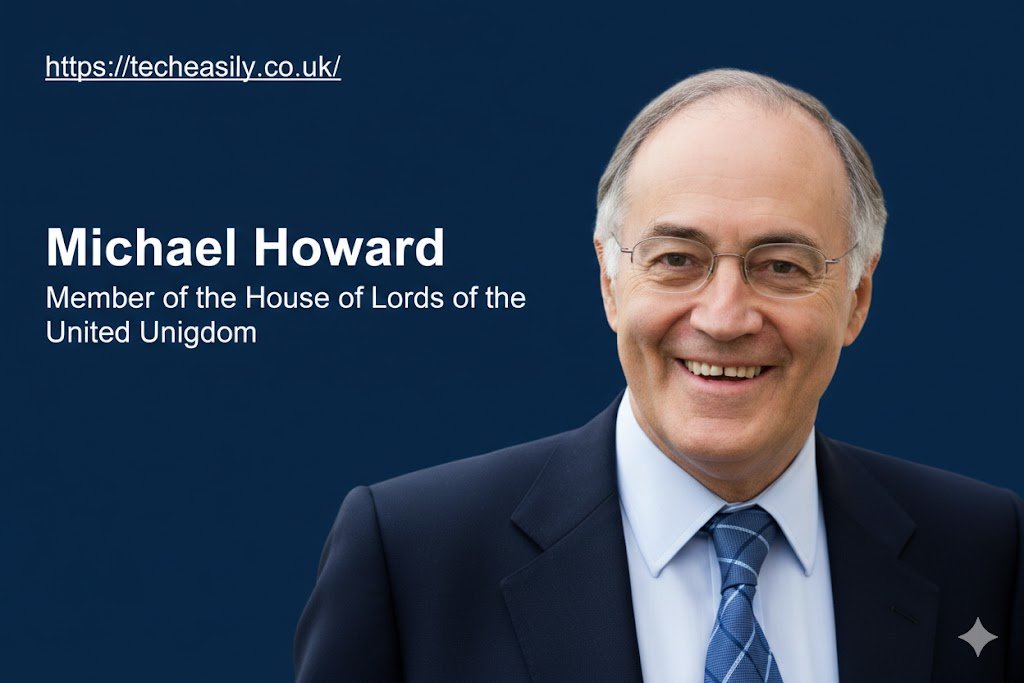
Michael Howard, born July 7, 1941, is a distinguished British Conservative politician who served in key government positions, including Home Secretary and Leader of the Conservative Party. Known for his tough stance on crime and his leadership through turbulent political times, Howard’s career is one of resilience and steady leadership in the face of shifting political landscapes.
Early Life and Education
Michael Howard was born Michael Hecht in Gorseinon, Wales, to a Romanian-Jewish father and a Welsh mother. His family later anglicized their surname to Howard, reflecting their desire to assimilate into British society. Raised in Wales, Howard attended Llanelli Grammar School before going on to study at Peterhouse College, Cambridge, where he earned a degree in Law. Howard then went on to pursue a career in law, training as a barrister, and was called to the Bar in 1964. His legal training would later inform much of his political philosophy and approach to governance.
Michael Howard Entry into Politics
Howard’s political journey began in 1983, when he was elected as Member of Parliament (MP) for Folkestone and Hythe. His political career took off quickly, and he became known for his legal acumen and clear, authoritative voice on national matters. Throughout his early years in Parliament, Howard focused on issues related to public safety, law enforcement, and the economy — subjects that would later define his tenure in key government roles.
Rising Through the Ranks
Howard’s rise in the Conservative Party was marked by his swift promotion to cabinet positions under both Margaret Thatcher and John Major. He held several significant roles in government, including:
- Secretary of State for Employment (1990–1992)
- Secretary of State for the Environment (1992–1993)
- Home Secretary (1993–1997)
As Home Secretary, Howard was known for his tough stance on crime and law enforcement. His policies focused on reducing crime rates, increasing the number of prisons, and tightening immigration controls. His time in the Home Office was particularly marked by his hardline policies on crime, where he advocated for longer sentences for criminals and a tougher approach to law enforcement.
Michael Howard Leader of the Conservative Party
In 2003, after the resignation of Iain Duncan Smith, Howard was elected Leader of the Conservative Party. His leadership came at a challenging time, as the Conservative Party was reeling from the effects of their defeat in the 1997 General Election. Howard worked to unify the party and present a strong opposition to the Labour government led by Tony Blair. He became the face of the Conservative resurgence, albeit in a highly contested political climate.
Under Howard’s leadership, the Conservatives made notable gains in the 2005 General Election, although they were unable to defeat the Labour government. Howard’s leadership ended shortly after the election when he resigned as party leader, giving way to David Cameron. Despite the setback, Howard’s tenure is remembered as one that kept the Conservative Party alive in the public eye during a time of major political shifts.
Life Peerage and House of Lords
After his time in the House of Commons, Michael Howard’s influence did not fade. In 2010, he was made a life peer in the House of Lords, taking the title Baron Howard of Lympne. As a member of the House of Lords, Howard continued to be a prominent voice on national security, law and order, and political reform. His experience and background in politics made him a valuable member of the Lords, where he contributed to the discussion on various matters of national importance.
Michael Howard Legacy in British Politics
Michael Howard’s legacy is defined by his commitment to public service and his strong leadership during difficult political times. As Home Secretary, he was instrumental in shaping the Conservative Party’s tough-on-crime policies, which resonated with many voters who felt the government was not doing enough to address crime and public safety.
His leadership of the Conservative Party, while ultimately unsuccessful in returning the party to power, is still seen as a period where the party solidified its commitment to conservative values in a changing world. Howard’s political philosophy was centered around strong national security, law and order, and a belief in individual responsibility — ideas that continue to influence Conservative thought to this day.
Michael Howard Personal Life
Outside of politics, Michael Howard is known for his private nature and dedication to his family. He has been married to Sandra Paul since 1975, and the couple has two children. Howard is also known for his love of history and philosophy, often engaging in private study to further understand the cultural and political forces shaping the world.
Conclusion
Michael Howard’s career is a testament to his dedication to public service and his steadfast leadership in the face of political adversity. As Home Secretary, Leader of the Conservative Party, and life peer in the House of Lords, Howard has left a lasting mark on British politics. His policies on law and order, as well as his ability to lead the Conservative Party through difficult times, have shaped the political landscape in ways that continue to influence British politics today. Whether viewed as a tough politician who made hard choices or as a leader who faced the challenges of his time, Michael Howard’s place in political history remains secure.