Introduction
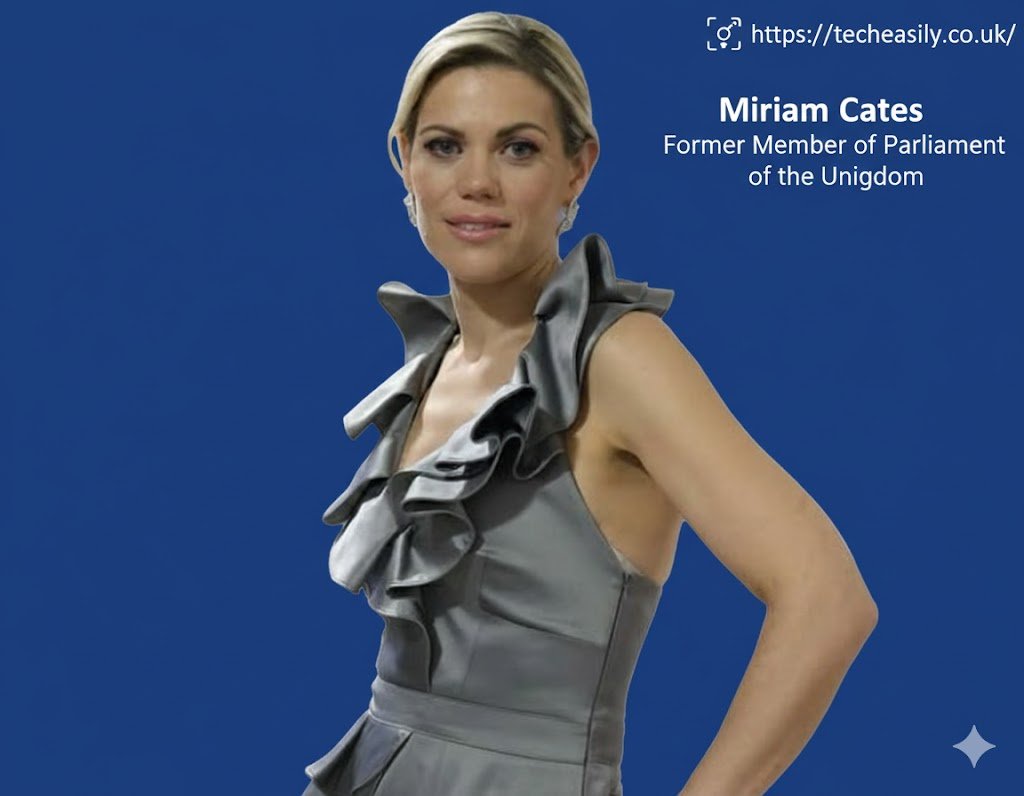
Miriam Cates, a name that became synonymous with conservative values in British politics, rose to national prominence as the Member of Parliament (MP) for Penistone and Stocksbridge from 2019 until 2024. Known for her strong positions on family policy, education reform, and social conservatism, Cates brought a fresh voice to the Conservative Party during her tenure. Her unique blend of political activism, deep-rooted faith, and unwavering dedication to traditional values made her a significant figure in the public discourse.
Early Life and Education
Born on August 23, 1982, in Sheffield, South Yorkshire, Miriam Joy Cates (née Atkins) grew up in a family that valued education and community involvement. Raised in a Christian household, Cates was always encouraged to think critically about the world and her role within it. She attended local schools in Sheffield, excelling academically, before pursuing her higher education at Christ’s College, Cambridge, where she studied Natural Sciences, with a particular focus on Genetics.
After earning her degree, Cates pursued a Postgraduate Certificate in Education from Sheffield Hallam University. This led to her career as a biology teacher at Tapton School in Sheffield, where she spent several years shaping the minds of young students. Her experiences in the classroom influenced her perspective on the challenges faced by families and children, setting the stage for her later political career.
Miriam Cates Political Rise and Career
Cates’s entry into politics was not immediate. Initially involved in community work and local politics, she became active within the Conservative Party and in 2019, she stood as a candidate for the seat of Penistone and Stocksbridge in the general election. This area, which had been a Labour stronghold for decades, was considered a major battleground. However, Cates managed to secure a historic victory, marking her as one of the rising stars of the Conservative Party.
Her victory in Penistone and Stocksbridge was significant, not only because of the constituency’s historical ties to the Labour Party but also because it showcased the appeal of her message in a traditional Labour stronghold. As an MP, Cates quickly became known for her strong stances on issues related to family, education, and conservative social values.
During her time in Parliament, Cates was involved in various committees, including the Education Select Committee and the Ecclesiastical Committee. She was a fierce advocate for parental rights in education and worked to ensure that families had a more prominent voice in the development of national policies related to children’s welfare, education, and social issues.
Miriam Cates Key Issues and Positions
As an MP, Cates focused on several issues that resonated deeply with her constituents and the broader conservative base. One of her core beliefs was the importance of family stability. She frequently argued that strong family structures were the bedrock of a healthy society and advocated for policies that supported married families, particularly those with children.
Her views on education were also a central part of her political agenda. Cates believed in empowering parents to have more control over their children’s education, particularly when it came to controversial topics like relationships and sex education (RSE). She pushed for reforms to ensure that curricula in schools aligned with parental values, promoting a more balanced and age-appropriate approach to teaching sensitive topics.
Additionally, Cates was an outspoken critic of the influence of social media and online platforms on young people, arguing that the digital age posed unique challenges to child welfare. She advocated for stronger regulations on social media platforms, aiming to protect children from harmful content, exploitation, and cyberbullying.
Public Image and Media Presence
Beyond her work in Parliament, Miriam Cates became a prominent voice in the media. After her time as an MP, she transitioned into broadcasting and media commentary. She took up a role as a presenter on GB News, a British news channel known for its conservative leanings. On the channel, she discussed a wide range of topics, from political debates to social issues, offering insights into her views on family life, education, and culture.
Cates also frequently appeared in print media, contributing opinion pieces to national newspapers and magazines. Through her writings and media appearances, she continued to advocate for the values that had defined her political career: traditionalism, family, and the importance of community.
Miriam Cates Personal Life: Family and Faith
Miriam Cates’s personal life has always been an important part of her public narrative. Married to David “Dave” Cates, the couple has three children. Her family plays a central role in her identity, and she often draws from her experiences as a mother when discussing policy related to children and family dynamics.
Her deep Christian faith is another key aspect of her personal life. Cates has consistently spoken about how her beliefs guide her approach to politics and public life. She is a devout evangelical Christian, and her faith has influenced many of her political stances, particularly when it comes to issues of marriage, family, and children’s rights.
Views on Family and Social Policy
A staunch advocate for the importance of traditional family structures, Cates’s policies often centered on the belief that strong families were crucial to the well-being of society as a whole. She argued that the government should do more to support families, particularly those raising children in difficult circumstances.
In addition to her views on family, Cates was a vocal proponent of parental rights in education. She believed that parents should have a greater say in what their children were taught, particularly in relation to sensitive topics like sex education and gender identity. Her views often placed her at odds with those advocating for more progressive policies in schools, but she remained steadfast in her belief that families should be the primary influence on children’s upbringing.
Controversies and Challenges
Like many politicians, Miriam Cates’s time in the public eye was not without controversy. Some of her views on topics like gender identity, same-sex marriage, and sex education sparked debates, both within the political sphere and in the media. Critics accused her of being too rigid in her views, while supporters praised her for sticking to her principles.
Her stance on conversion therapy, for example, drew significant attention. While Cates has been clear in her opposition to harmful practices, some of her statements about the issue were controversial, particularly in relation to her association with certain religious groups. Nonetheless, she maintained that her position was rooted in her Christian faith and her belief in the sanctity of family.
Despite the challenges, Cates remained a vocal advocate for her beliefs, often speaking out against what she saw as the erosion of traditional values in British society.
Post-Parliamentary Life and Legacy
After leaving Parliament in 2024, Miriam Cates did not disappear from the public eye. She continued her work as a media personality, offering political commentary and analysis on various news outlets. She also became involved in various think tanks and organizations focused on conservative policies, particularly those related to family life, education, and social issues.
Her legacy as an MP is defined by her commitment to family, faith, and traditional values. Though her time in Parliament was relatively short, Cates’s impact on the political landscape of the UK, especially in relation to family policy and education reform, is undeniable.
Conclusion
Miriam Cates’s political journey is a testament to her dedication to the values she holds dear: family, faith, and traditionalism. From her rise as a Member of Parliament to her media career, she has remained a steadfast advocate for conservative policies and has become a prominent figure in the British political landscape. Whether you agree with her views or not, there’s no denying the impact she’s had on shaping debates around family values, education, and social conservatism in the UK.
Through her work in Parliament, her media appearances, and her personal commitment to her family and faith, Miriam Cates has left an indelible mark on British politics and continues to influence discussions on the issues she cares most about.