
When an HVAC system fails in the middle of a heatwave or during a freezing January night, every minute counts. Homeowners and property managers are not thinking about maintenance logs. They want the system running again.
But behind the scenes, missing service history can quietly slow everything down.
For HVAC companies across the United States and Canada, emergency response is often where reputation is won or lost. The difference between a 45-minute fix and a three-hour ordeal often comes down to one thing: access to accurate, complete service records.
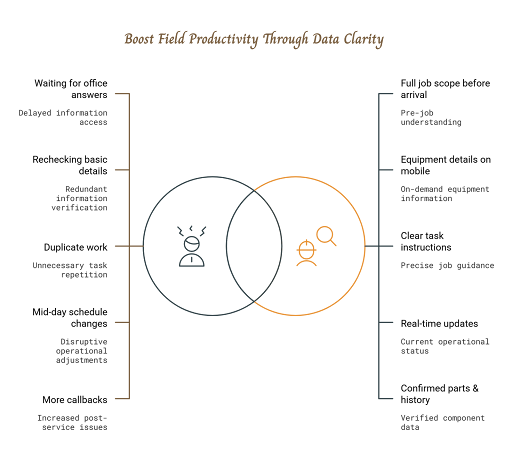
The Real Cost of Walking in Blind
Imagine this scenario.
Your technician arrives at a commercial rooftop unit that has stopped cooling. The building manager says, “It was just serviced last year.” That is all the information they have.
Now your tech has to:
- Inspect the full system from scratch
- Guess which components were previously replaced
- Call the office for paperwork that may or may not exist
- Spend extra time diagnosing issues that could have been obvious with a service history
That extra time adds up. It increases labor costs, frustrates customers, and delays other scheduled jobs.
In emergency response, uncertainty is expensive.
How Missing Service Records Slow Technicians Down
- Repeated Diagnostics
Without prior notes, technicians often redo work that has already been done. If a capacitor was replaced six months ago, that context matters. If refrigerant was topped off twice in the past year, that suggests a leak pattern.
When technicians lack this insight, they troubleshoot from zero. That means longer time on-site and a higher chance of misdiagnosis.
- Inconsistent Repairs
Different technicians may have worked on the same system over time. If there is no shared digital record, each visit becomes isolated. One tech may recommend a compressor replacement. Another may continue with patch repairs.
This inconsistency can create confusion and erode trust with customers.
- Slower Decision-Making
During emergencies, speed depends on confidence. When a technician can open a full history of service calls, previous issues, and past recommendations, decisions are faster and more precise.
Without it, every step requires extra verification.
Emergency Calls Are High-Stakes Moments
According to industry data from the Air Conditioning Contractors of America, customer retention in HVAC often hinges on response time and first-visit resolution. Emergency service is not just another work order. It is a trust moment.
If your team shows up prepared, customers feel reassured.
If your team spends the first hour asking basic questions about past repairs, confidence drops quickly.
In competitive markets, that difference can determine whether a client renews a service agreement or calls someone else next season.
What Complete Service History Actually Looks Like
Service history is more than a folder in a filing cabinet.
In 2026, leading HVAC companies maintain structured digital records that include:
- Date of every visit
- Technician notes
- Photos of equipment conditions
- Past repair recommendations
- Recurring issues or patterns
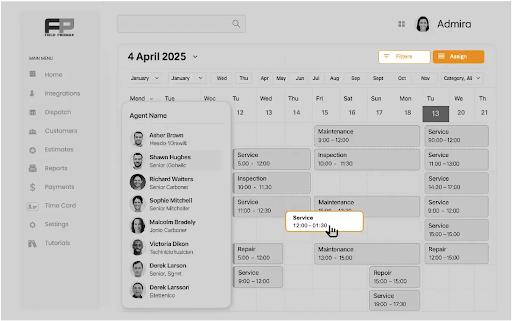
With tools like Field Promax, technicians can access detailed digital work orders directly from their mobile devices before stepping onto a job site. That context changes everything.
Instead of asking, “What happened last time?” they walk in already informed.
The Impact on First-Time Fix Rates
First-time fix rate is one of the most important performance metrics for HVAC businesses. When emergency calls require second visits, it affects:
- Labor utilization
- Fuel costs
- Scheduling capacity
- Customer satisfaction
Missing service history directly reduces first-time fix rates.
If a technician knows that a blower motor was flagged for replacement during the last maintenance visit but never approved, they can address it immediately. Without that knowledge, they may treat symptoms instead of root causes.
The result is a callback that could have been avoided.
Real-World Example: Two Emergency Calls
Company A keeps paper records and scattered notes.
Company B keeps centralized digital records accessible to every technician.
Both receive a 9 p.m. emergency call for a no-heat situation in a multi-family property.
Company A spends 25 minutes reviewing paperwork back at the office and relaying information by phone. The technician arrives unsure of prior system issues.
Company B’s technician reviews the entire service history from the truck before stepping inside. They see that the ignition control module was acting up during the last inspection and was noted as “likely to fail within six months.”
The repair is completed in under an hour.
Same equipment. Same issue. Different preparations.
Why Office Teams Feel the Strain Too
Missing service history does not just slow technicians. It burdens office staff.
Dispatchers often scramble to answer questions like:
“When was the last time we replaced this compressor?” “Did we recommend a system upgrade last year?” “Is this unit still under warranty?”
If information is scattered, the office becomes a bottleneck during emergencies. That slows the entire workflow.
Modern field service software centralizes records so office teams and technicians see the same real-time information. This is one reason many contractors explore HVAC management solutions like those available through Field Promax.
It reduces back-and-forth communication during urgent situations.
Customer Expectations Have Changed
Homeowners and commercial property managers in 2026 expect professionalism. They assume that service companies track past work. When a technician asks, “Has anyone worked on this unit before?” it can signal disorganization.
Customers often interpret preparedness as competence.
If your technician can say, “I see we replaced the condenser fan motor last summer and noted airflow restrictions,” that immediately builds confidence.
Preparedness feels professional.
A Quick Self-Check for HVAC Owners
Ask yourself:
- Can every technician access full service history from the field?
- Are technician notes standardized and detailed?
- Can you identify recurring equipment failures quickly?
- Do emergency calls often require follow-up visits?
If the answer to any of these is no, missing service data may be costing you more than you realize.
Building Faster Emergency Response Without Adding Staff
Many HVAC business owners assume faster emergency response requires hiring more technicians. Often, the real issue is information flow.
When service history is organized and accessible:
- Technicians diagnose faster
- Repairs are more accurate
- Office staff can answer questions instantly
- Customers experience shorter downtime
Speed improves without increasing headcount.
That operational leverage matters in peak seasons when call volume spikes.
The Bigger Picture: Reputation and Reviews
Emergency service experiences heavily influence online reviews. A delayed repair due to missing records can turn into a public complaint.
On the other hand, a fast, informed response often leads to five-star feedback.
Over time, that affects lead generation, referral rates, and revenue stability.
Reliable service history is not just an internal tool. It shapes how your brand is perceived in your market.
Final Thoughts
HVAC emergencies are unpredictable. Information gaps shouldn’t be.
When technicians arrive without service history, it slows repairs, frustrates customers, and adds pressure to your office team. In a business where response time defines trust, walking in without context is a risk most companies can’t afford.
When records, notes, and past recommendations are instantly accessible, emergency calls become faster, smoother, and more profitable. First-time fix rates improve. Customer confidence rises.
For HVAC contractors focused on long-term growth, improving service record visibility isn’t a small tweak; it’s a strategic move. Tools like Field Promax help centralize that visibility so your team shows up prepared every time.
Frequently Asked Questions
- Why is service history so important during HVAC emergencies?
Service history gives technicians immediate context about past repairs, recurring issues, and previous recommendations. During emergencies, that context reduces guesswork, shortens diagnostic time, and improves first-time fix rates.
- Does missing service history really impact response time?
Yes. When technicians arrive without prior knowledge, they often spend extra time inspecting components that may not be related to the failure. Even an additional 20 to 30 minutes per call can delay other scheduled emergency jobs.
- How can HVAC companies organize service history effectively?
Most modern HVAC businesses use centralized field service software to document every visit, technician note, and recommendation. Digital records ensure every team member sees the same accurate information in real time.
- Can better service history improve customer retention?
Absolutely. Faster, more informed emergency repairs build trust. When customers feel that your company understands their equipment history and resolves issues quickly, they are far more likely to renew maintenance agreements and leave positive reviews.
READ MORE: What Is Cost Segregation and Bonus Depreciation? A Practical Guide for Real Estate Owners