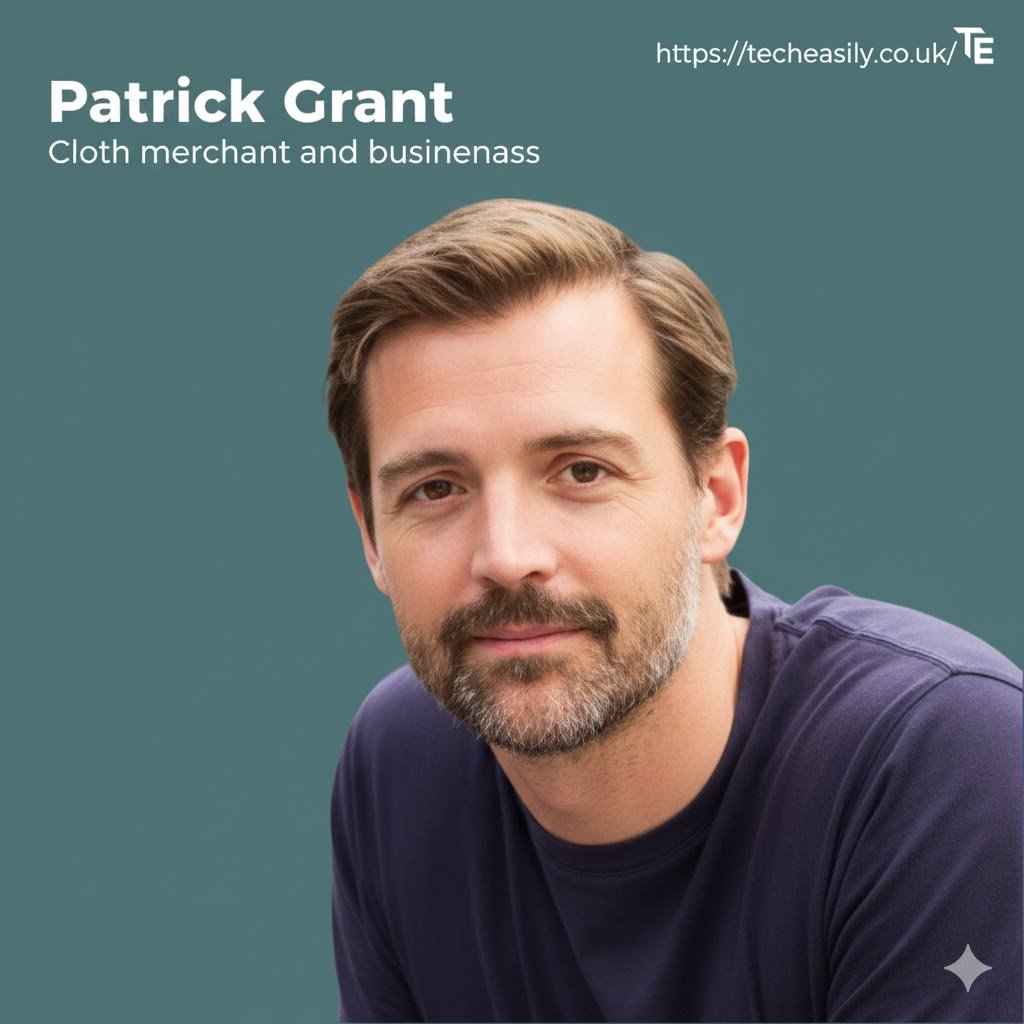
Patrick Grant is a Scottish-born clothier, businessman, author, and TV personality — best known for transforming traditional menswear tailoring houses and for advocating sustainable practices in the fashion industry. Best recognized for his role as a judge on the popular TV series The Great British Sewing Bee, Grant is also an influential businessman, having revived some of the UK’s most historic tailoring houses while promoting sustainable practices in the fashion industry. Through his leadership, Patrick Grant has played a key role in reshaping how we think about clothing—combining craftsmanship with modern business acumen and a focus on environmental responsibility.
Early Life and Education
Born on May 1, 1972, in Edinburgh, Scotland, Patrick Grant grew up with a deep appreciation for craftsmanship and quality. His upbringing in Morningside, a district known for its intellectual and cultural history, was shaped by his mother, Susan, who worked at the University of Edinburgh, and his father, James Grant, who had a varied career managing the pop band Marmalade, then becoming an accountant, and later a rugby coach. Grant’s family provided him with a mix of creative influence and practical business sensibilities, which later informed his career choices.
He attended Edinburgh Academy before studying Materials Science & Engineering at the University of Leeds, where he graduated in the mid-90s. Grant’s educational background is somewhat unconventional for a fashion designer, but it was this blend of technical and business skills that helped him navigate the world of tailoring and menswear with a unique perspective. Later, he pursued an MBA from Saïd Business School at the University of Oxford, solidifying his understanding of business strategy and management, which would later prove vital when he acquired and revived historic tailoring houses.
patrick grant Career Transformation: Reviving Heritage Tailoring
In 2005, Grant made a bold leap into the fashion world by acquiring Norton & Sons, a historic Savile Row tailor, which was on the brink of closing down. Patrick Grant sold his possessions—his house, his car, and most of his savings—to raise the funds to purchase the company. His decision was not without risk, but his business instincts paid off. He brought a modern sensibility to the traditional tailor, increasing production while retaining the high standards of craftsmanship that had made the brand iconic. Under Grant’s leadership, Norton & Sons flourished, regaining its reputation for quality bespoke suits and solidifying Grant’s position as a key figure in British tailoring.
Following the success at Norton & Sons, Grant relaunched E. Tautz & Sons in 2009, a menswear brand that had been dormant for many years. The brand, now known for its ready-to-wear collections, garnered attention and earned Grant the prestigious title of Menswear Designer of the Year at the 2010 British Fashion Awards. His success at E. Tautz marked Grant as a visionary in the fashion world—someone who could blend traditional British tailoring with modern, ready-to-wear sensibilities.
Sustainability and Ethical Fashion: A New Focus
In addition to his work with traditional tailoring houses, Grant has become a leading advocate for sustainable fashion. In 2015, he purchased Cookson & Clegg, a long-standing manufacturer in Blackburn, saving the company from financial collapse. This acquisition was a key moment in Grant’s broader mission to preserve British garment manufacturing, creating jobs and supporting local communities.
The following year, in 2016, he founded Community Clothing, a social‑enterprise brand dedicated to producing high-quality, affordable garments made in the UK. By working directly with UK manufacturers, Community Clothing helps revive local production skills while promoting ethical, sustainable clothing practices. The goal is to offer durable, well-made clothing to the public while supporting the UK’s textile industry and reducing the environmental impact of fast fashion.
Grant’s philosophy centers around buying less and buying better, challenging the wastefulness of fast fashion, which he has criticized for its environmental toll and its exploitation of labor. He advocates for mindful consumption—encouraging consumers to choose quality over quantity and to invest in timeless, durable garments.
Public Persona: Judge on The Great British Sewing Bee
Since 2013, Patrick Grant has been a regular judge on the BBC show The Great British Sewing Bee — a platform that has brought his passion for tailoring, craftsmanship, and sustainable fashion to mainstream audiences. His role on the show has brought him into millions of households, allowing him to influence how people view clothing and craftsmanship. Grant’s approach to judging is often described as encouraging and thoughtful, emphasizing skill and precision over mere creativity. His presence on the show has solidified his role as an ambassador for British craftsmanship, style, and sustainability.
patrick grant Personal Life: Privacy and Relationships
Though Grant is a public figure, he has managed to keep much of his personal life private. He was in a long-term relationship with designer Katie Hillier from 2007 until their separation in 2015. As of 2025, Grant is reportedly in a relationship with a woman described as a dentist, though he has kept the details of his personal life under wraps. He has no children, and little is known about his current family dynamics. Grant has expressed a preference for maintaining privacy in his personal relationships, especially after the public scrutiny he faced during his previous relationship.
Achievements and Legacy
Patrick Grant’s contributions to fashion, both as a businessman and as an advocate for sustainability, have earned him numerous accolades. In 2013, he was appointed an Honorary Professor at Glasgow Caledonian University, and in 2017, he received an honorary doctorate from Heriot-Watt University for his work in fashion and manufacturing. In addition, he was awarded a fellowship from the Royal Society of Arts (RSA) for his commitment to sustainability and social enterprise.
His book, Less: Stop Buying So Much Rubbish, published in 2024, expands on his philosophy of sustainable living and ethical consumption. Through his writing and public speaking, Grant is working to change the culture of over-consumption and help people re-evaluate how they engage with their wardrobes.
patrick grant Net Worth and Financial Success
While there is no official net worth publicly disclosed for Patrick Grant, his financial success stems from his ownership of multiple businesses and brands, including Norton & Sons, E. Tautz, and Community Clothing. While exact figures are hard to come by, his businesses are estimated to be worth tens of millions of pounds. In 2025, various sources estimate his net worth at approximately £29 million, with his wealth generated from his tailoring ventures, sustainable fashion initiatives, and media appearances. His commitment to ethical business practices has not only garnered him financial success but also a loyal following of consumers who share his values.
Conclusion
Patrick Grant’s career is a model of how traditional craftsmanship and modern business can coexist, and how sustainability can be woven into the fabric of fashion. His ability to revive historic tailoring houses, create a thriving social enterprise, and challenge the fast fashion industry makes him a leader in the movement for responsible fashion. Beyond his business ventures, Grant has left an indelible mark on the way we think about clothing, its production, and its impact on the planet.
As his career continues to evolve, Patrick Grant remains a key figure in British fashion, and his influence will likely continue to shape the industry for years to come.