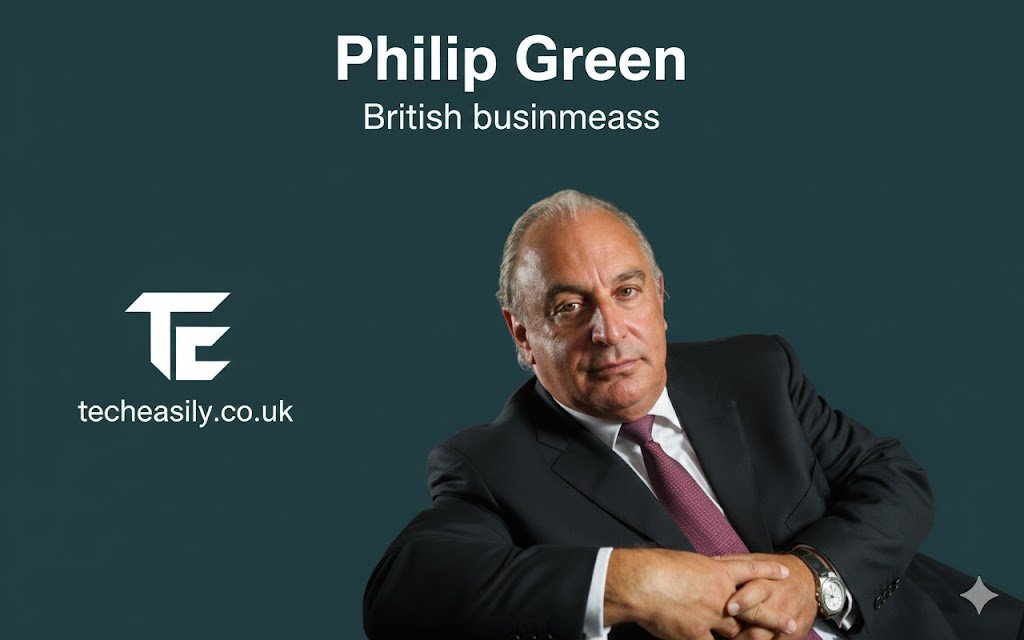
Early Life and Background
Sir Philip Green was born on March 15, 1952, in Croydon, South London, England. He grew up in a middle-class Jewish family. His father, Simon Green, was a successful property developer and electrical goods retailer, while his mother was Alma Green. At the age of 12, his father tragically passed away from a heart attack, which had a significant impact on his early life. Philip also has an older sister, Elizabeth.
He attended Carmel College, a Jewish boarding school in Oxfordshire, but left school at the age of 16 without completing his O-levels. Despite this, Philip was determined to make his mark in the business world. He started working early, taking jobs in various sectors to gain practical experience. His early years shaped his entrepreneurial mindset, which would become central to his future success.
Philip Green Education
Philip Green did not complete formal higher education due to his early exit from school. However, he quickly learned the ropes of business through practical experience and mentorship. His first venture into the business world was with an import/export business that he started at a young age, which allowed him to develop a deep understanding of retail and trade.
Early Career
Green’s career began with modest beginnings, but he quickly rose through the ranks of the business world. At 21 years old, he started his first business, importing jeans from the Far East and selling them to retail shops in London. This small enterprise was funded by a £20,000 loan from his family, a starting point that would lead him to greater business success.
By the age of 26, Green expanded his operations into larger retail deals, purchasing struggling retail stores and turning them into profitable businesses. His big break came when he acquired BHS (British Home Stores) in 2000 for £200 million. He revamped the company and turned it into a leading name in the UK retail sector.
Building the Retail Empire: Arcadia Group
In 2002, Green’s investment company bought Arcadia Group, which included iconic high-street brands such as Topshop, Topman, Miss Selfridge, Burton, Dorothy Perkins, and Evans. This acquisition positioned Green as a dominant figure in UK retail, earning him the nickname “King of the High Street.” His retail empire continued to grow as he expanded his control over these brands, turning them into household names.
By the mid-2000s, Green’s wealth and influence had reached unprecedented levels, with his net worth peaking at an estimated £4.9 billion in 2007. He was widely recognized for his business savvy and became a household name in the UK, not just for his retail achievements but for his extravagant lifestyle as well.
In 2006, Green was knighted by Queen Elizabeth II for his services to the retail industry. The knighthood added to his celebrity status, but it also marked the height of his career.
The Decline: Controversies and Business Failures
Despite his early success, Green’s later years were marked by significant controversies that tarnished his reputation. The most notable was the collapse of BHS in 2016, which led to widespread criticism. Green had sold BHS for £1 to a consortium of investors, and the company went into administration shortly after, leaving behind 11,000 employees without jobs and a massive pension deficit of £571 million. This led to a public outcry, with accusations that Green had extracted millions in dividends while failing to properly address the company’s pension obligations.
Following the failure of BHS, Green faced scrutiny for his handling of the company’s pension plan and his decision to sell it off. This controversy ultimately resulted in legal battles and public censure, which severely impacted his once-sterling reputation.
In 2020, Arcadia Group, Green’s retail empire, also entered administration, primarily due to the rise of online retail and the impact of the COVID-19 pandemic. Many of Green’s high-street brands, including Topshop, Burton, and Dorothy Perkins, were unable to adapt to the changing retail landscape, leading to the collapse of the company and the closure of numerous stores.
Philip Green Net Worth and Lifestyle
As of 2023, Philip Green’s net worth was estimated to be around £910 million, according to the Sunday Times Rich List. This is a far cry from his peak net worth of £4.9 billion in 2007. Much of his wealth is tied to his remaining assets, including luxury properties, investments, and his yacht, Lionheart, which is reportedly worth over £100 million. Green is known to live a lavish lifestyle, owning several homes and enjoying a high-profile lifestyle.
He has also been a controversial figure due to his personal wealth, particularly given the pension scandal involving BHS and his ownership of luxury assets despite the financial collapse of his companies.
Philip Green Family Life: Spouse, Children, and Personal Details
- Spouse: Green is married to Tina Green (née Christina Palos), a Greek-American businesswoman. They married in 1990.
- Children: The couple has two children, including Chloe Green, who has occasionally been in the media spotlight due to her relationship with Jeremy Meeks, a former convict turned model.
- Parents: Green’s father, Simon Green, was a property developer who passed away when Philip was just 12 years old. His mother, Alma Green, had a significant influence on his upbringing.
- Religion: Philip Green comes from a Jewish family background, but there has been no detailed public disclosure about his current religious practices.
- Height: Unfortunately, Philip Green’s height is not publicly documented in reliable sources.
What Is Philip Green Doing Now?
As of 2025, Philip Green remains a figure of interest in the business world, but his role in the retail industry has significantly diminished. With the collapse of Arcadia and BHS, Green’s empire has been broken apart, and his visibility in the business world has greatly reduced. However, his wealth and personal assets continue to attract attention, as does his ongoing legal and financial battles, especially regarding the BHS pension crisis.
While he has kept a low profile in recent years, Green is still occasionally mentioned in the media due to his legacy in British retail and the controversies surrounding his business practices.
Conclusion
Sir Philip Green’s career is a testament to both the highs of entrepreneurial success and the risks of neglecting corporate responsibility. He revolutionized British retail and amassed a fortune, but his legacy is overshadowed by the controversies that followed his business empire’s collapse. His story serves as a reminder of the importance of ethical business practices and the long-term impact of corporate governance on reputation and financial success.
Whether viewed as a retail pioneer or a cautionary tale, Sir Philip Green’s influence on the UK high street is undeniable. His rise to prominence, followed by his fall from grace, makes him one of the most controversial figures in recent British business history.