When people talk about smart home tech, they usually start with cameras, thermostats, and voice assistants. The garage door often gets ignored, even though it is one of the biggest moving entry points to the home and one of the most common security weak spots. A modern garage setup is not just about convenience. It is about access control, safety sensors, reliability, and knowing what is happening when you are not home. If you are upgrading or troubleshooting your setup, services like Sacramento Garage Doors can help you connect the physical hardware side with the everyday usability you expect from modern tech.
Why the garage door is a tech problem, not just a mechanical one
A garage door is a system. It is hardware, sensors, power, remote controls, and increasingly software. If any part is outdated or misaligned, you will feel it as friction: doors that open inconsistently, remotes that work only sometimes, loud operation, random reversals, or delays that make you question whether the door actually closed.
From a security perspective, older openers and poorly configured remotes can also create risk. People focus on front door locks while forgetting that many garages lead directly into the house. If the garage door is unreliable or easy to exploit, the rest of the smart home ecosystem is working with a weak link.
The biggest smart garage upgrades that actually matter
Smart openers and add on controllers
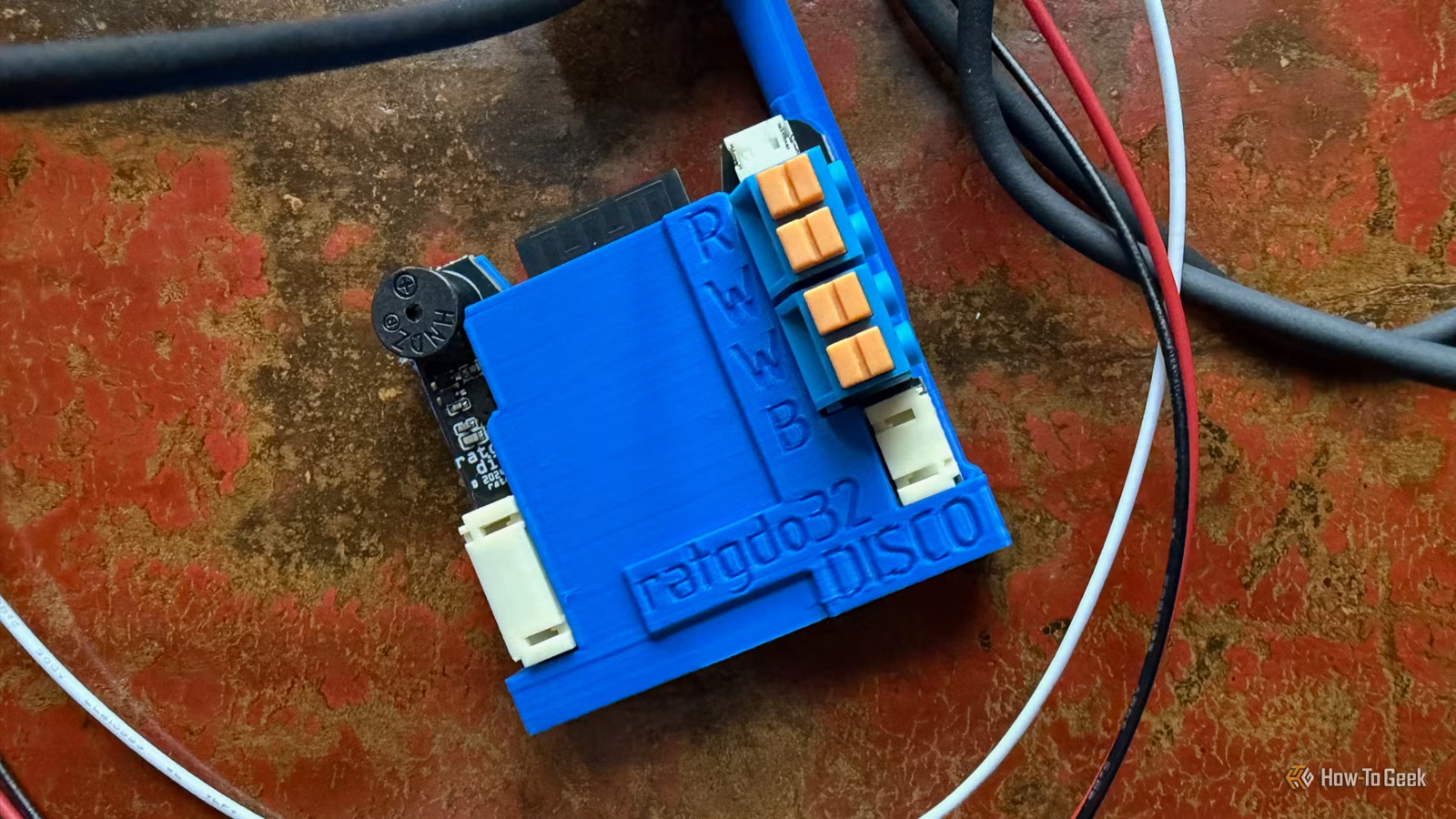
A smart garage controller lets you check door status, open or close remotely, and receive alerts. This is one of the highest impact upgrades because it turns the garage into a trackable access point. You can verify whether it is closed without driving back home, and you can see patterns, like doors being opened unexpectedly.
Motion and presence lighting
Good lighting is not flashy tech, but it is practical security. Motion lighting reduces the chance of someone approaching unnoticed and makes the garage safer at night. If your garage is a workspace too, upgrading to brighter, efficient lighting also improves daily use.
Modern safety sensors
Photo eye sensors are critical. If they are misaligned, dirty, or outdated, you may see the door reverse unexpectedly or, worse, fail to reverse when it should. That is not just annoying. It is a safety issue, especially for households with kids and pets.
Reliability is the real “smart” feature
A smart garage is useless if the door is physically struggling. Many “smart home” frustrations start with basic mechanical issues that software cannot fix: worn springs, tired rollers, misaligned tracks, loose hardware, and openers that are underpowered for the door’s weight.
A good rule is this: if the door is loud, jerky, or inconsistent, fix the mechanics first. Then add smart features. When the system is stable, smart controls feel effortless. When it is unstable, smart controls just give you more notifications about a problem that still exists.
A quick checklist to troubleshoot common issues
Door opens but will not close
Often sensor related. Check the photo eyes for alignment and clean them. Also check if something is blocking the sensor line.
Remote range is weak
Could be remote battery, opener antenna position, interference, or an aging receiver. In some cases, LED bulbs can cause interference if they are the wrong type for the opener.
Door reverses or stops mid travel
Can be track alignment, rollers, tension, or resistance. It can also be opener force settings that are too sensitive.
Door is very loud
Typically rollers, hinges, lack of lubrication, or worn parts. A loud door is often a door asking for maintenance.
Smart garage security habits most people skip
Use unique access codes and rotate them
If you use a keypad, treat it like a password. Change it occasionally, especially if you have shared it with contractors, guests, or short term visitors.
Turn on alerts
Door open alerts and “left open” notifications are simple but powerful. Many break ins happen because a door was accidentally left open.
Secure your Wi Fi properly
If your garage controller connects to Wi Fi, make sure your router security is not outdated. Use strong passwords and avoid sharing your main network widely. If you are very security conscious, a separate network for IoT devices can reduce exposure.
Check for manual release risks
In some setups, the emergency release cord can be exploited from outside if there is a gap. Simple protective measures can help depending on the door style.
When to repair vs replace
Repairs make sense when the door is structurally sound and the issue is a part that wears over time, like springs, rollers, cables, sensors, or opener components. Replacement makes sense when the door is heavily damaged, outdated, poorly insulated, or when repeated repairs keep happening because the system is at end of life.
If you care about energy efficiency, insulation is a bigger deal than most people think, especially if your garage shares walls with living space or if you use it as a gym or workshop. A more insulated door can reduce heat transfer and make the home feel more stable.
The takeaway
A garage door is one of the most practical places to modernize because it affects security, daily convenience, and home reliability. The best approach is to treat it as both a tech upgrade and a mechanical system. Get the physical performance right, then add smart monitoring and access control so the whole experience feels seamless.
If you want your smart home to actually feel smart, the garage is a great place to start.