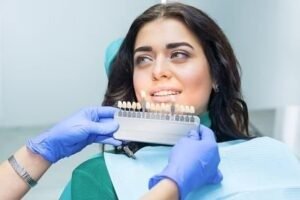
Bright, block-white veneers once filled social feeds and glossy magazines. For a time, dramatic change was the goal. Yet the mood has shifted. More people now want their smile to look like their own, just healthier, balanced, and refreshed.
This change is shaping the future of cosmetic dentistry in Cardiff, where the focus is no longer on obvious transformation but on careful refinement. The idea is simple: a smile should fit the face, not overpower it.
Moving Away from Ultra-White Veneers
A decade ago, very white, uniform veneers were often requested. The result could look striking in photos, but less natural in everyday life. Teeth that are too opaque or identical in shape can draw attention for the wrong reasons.
Dentists involved in cosmetic dentistry in Cardiff report that patients are now asking for softer tones and subtle shaping. Natural teeth have gentle variations in colour and light reflection. They are not flat or chalky. Replicating this detail requires restraint and careful planning.
The move away from aggressive tooth reduction is also part of this trend. Over-preparing teeth for thick veneers can weaken the structure and affect long-term health. A more conservative approach protects enamel wherever possible. This not only supports oral health but also creates results that age well.
The Importance of Facial Proportions
A smile does not exist in isolation. It sits within the wider frame of the face. Lip shape, skin tone, tooth position, and even speech patterns all play a role.
Modern cosmetic dentistry in Cardiff often begins with a detailed facial assessment. Dentists study how the upper lip rests at ease and how much of the tooth shows when speaking. The width of the smile is compared with the width of the face. Small adjustments can make a noticeable difference without appearing artificial.
For example, slightly lengthening worn edges can restore a youthful look. Softening sharp corners may create harmony with delicate facial features. None of these changes needs to be dramatic. In fact, subtlety is often what makes a smile feel authentic.
This measured planning helps avoid a one-size-fits-all outcome. Each person’s face is unique, so the design should reflect that individuality.
Digital Smile Planning: A Practical Tool
Technology is playing a steady role in this shift. Digital scanning and smile simulation tools allow dentists to map tooth position with precision. Instead of relying on traditional moulds alone, clinicians can now build a visual plan before treatment begins.
Within cosmetic dentistry in Cardiff, digital smile planning supports careful communication. Patients can see a proposed outcome and discuss shape, shade, and balance before any work is carried out. This reduces uncertainty and helps align expectations.
Digital tools also support conservative treatment. When measurements are accurate, less guesswork is involved. Dentists can remove only what is necessary and preserve healthy structure. This careful approach reflects a wider move towards responsible cosmetic care.
It is worth noting that technology does not replace skill or judgement. It simply supports them. The dentist’s understanding of anatomy, bite alignment, and long-term stability remains central.
Why Conservative Dentistry Matters
The phrase “conservative dentistry” refers to preserving as much natural tooth tissue as possible. In cosmetic care, this often means choosing options like enamel reshaping, whitening, or composite bonding before considering porcelain veneers.
Many practitioners within cosmetic dentistry in Cardiff are seeing growing interest in these gentler options. Composite bonding, for instance, can reshape small chips or gaps with little or no drilling. Whitening can lift shade safely when guided by a clinician. Orthodontic treatment can align teeth before any restorative work is considered.
The benefit of this approach is long-term stability. Natural enamel is strong. Once removed, it cannot grow back. Preserving it supports function and comfort over time.
Patients are becoming more informed about this. They are asking questions about durability, maintenance, and reversibility. This reflects a mature attitude towards cosmetic care, where health and appearance are considered together.
The Role of Trust and Open Discussion
Subtle cosmetic treatment depends on clear dialogue. A dentist should listen carefully to what a patient hopes to achieve and explain what is realistic. Photographs, scans, and trial mock-ups can help guide these conversations.
In clinics such as Cyncoed Dental Practice, the emphasis is often on measured improvement rather than dramatic change. This aligns with the broader direction of cosmetic dentistry in Cardiff, where trust and planning guide decisions.
A natural smile should not look like dental work. It should look like you, on a good day.
A Wider Cultural Shift
This trend towards “undetectable dentistry” reflects a wider cultural change. Many people now value authenticity over perfection. Small details, slight asymmetry, and soft contours are seen as part of human character.
In cosmetic dental care, this translates into layered translucency, gentle contouring, and balanced proportions. The goal is harmony, not uniformity.
As awareness grows, cosmetic dentistry in Cardiff continues to adapt. The focus is not on creating identical smiles, but on supporting confident, healthy expressions that suit each individual.
Final Thoughts
The future of cosmetic dental care appears calm and thoughtful. The demand for bright, uniform veneers is giving way to interest in subtle refinement and careful planning.
Through attention to facial proportions, responsible use of digital tools, and a commitment to conservative treatment, cosmetic dentistry in Cardiff is reflecting this shift. A well-designed smile should enhance natural features, not distract from them.
When dentistry respects biology and individuality, the result is often the most satisfying of all: a smile that feels entirely your own.