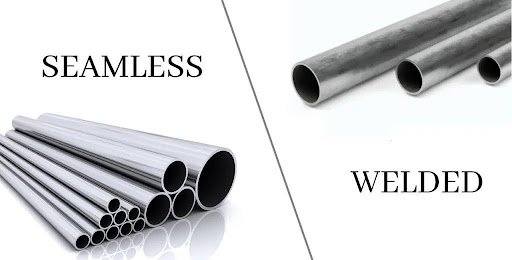
Steel pipes are important in many industries. They carry oil, gas, water, and other fluids. They also support buildings and machines. But not every steel pipe works the same way. Two main types exist: seamless and welded. This article gives a clear comparison of both. We will explain what each type is, how they are made, their good points and bad points, costs, sizes, and real uses. You will see the facts side by side so you can pick the right pipe for your job. The information is simple and direct to help anyone understand.
What Are Seamless Steel Pipes?
Seamless steel pipes are tubes with no joints or seams. They come from one single piece of steel. This design means the pipe has the same strength all around its body. There is no weld line that could become a weak spot. Because of this, seamless pipes handle high pressure very well. They also work fine under high heat or in places where leaks must not happen.
These pipes feel solid and smooth inside and out. Factories test them carefully to make sure there are no hidden cracks. Many people choose seamless pipes when safety comes first. For example, in deep oil wells or chemical plants, the extra reliability makes a big difference. Seamless pipes can bend a little without breaking, which helps in some installations. However, they usually cost more and come in fewer size choices. Still, for tough jobs, their uniform structure gives peace of mind.
How Seamless Steel Pipes Are Made
The making of seamless steel pipes starts with a solid steel rod called a billet. Workers heat the billet until it is soft enough to shape. Then a sharp tool pushes through the center to create a hollow tube. This step is called piercing. After that, rollers stretch and shape the tube to the exact diameter and wall thickness needed. The pipe cools slowly to keep its strength.
Next comes finishing. The ends get cut straight, and the surface gets cleaned. Every pipe goes through pressure tests and checks for defects. The whole process needs heavy machines and takes time. It also wastes some steel because the center part of the billet gets removed. That is one reason seamless pipes are not cheap. But the final product has no weld, so it performs evenly in every direction. Factories follow strict rules to keep quality high for every batch.
What Are Welded Steel Pipes?
Welded steel pipes start as flat steel sheets or coils. These sheets get rolled into a tube shape, and the edges join together with a weld. A seam runs along the length or around the pipe. Modern welding makes this seam strong and reliable. In most cases, the seam holds up just as well as the rest of the pipe under normal conditions.
Welded pipes are common because they are easy to produce in many sizes. You see them in water systems, gas lines, and building frames. The seam can be seen on the outside, but it does not affect daily use much. Welded pipes also accept coatings and paints easily to fight rust. They offer good value when you need pipes for standard jobs that do not involve extreme pressure or heat.
How Welded Steel Pipes Are Made
Making welded steel pipes begins with steel plates or coils. The steel gets rolled into a cylinder. Then the edges meet and get joined by welding. Different methods exist. Electric resistance welding uses electricity and pressure to melt the edges together fast. Submerged arc welding uses a special powder to protect the weld while it forms. Some pipes get welded straight down the length, while others get welded in a spiral for larger sizes.
After welding, the pipe gets heated again to remove stress. It is then straightened and cut to length. Inspectors check the weld with machines to confirm it has no gaps. The process is quick and uses less raw material than seamless methods. This keeps production costs down. Factories can make very long pipes this way and adjust sizes easily for customer orders. The final pipes meet industry standards and work well for most applications.
Main Differences in Strength and Performance
Strength is one of the biggest differences between the two types. Seamless pipes have even strength because there is no weld. They resist bursting under high pressure better in many tests. This makes them safer for critical lines that carry hot steam or high-pressure gas. Welded pipes can have a small difference at the seam, but good welding today closes that gap. In everyday use, both types last long and perform safely.
Performance also depends on the environment. Seamless pipes often handle corrosion and bending better since the whole pipe is uniform. Welded pipes can get the same protection with extra coatings. Both types pass pressure tests, but seamless ones usually get chosen when failure is not an option. For lower pressure jobs, the performance difference is small, and welded pipes do the job fine.
Cost Comparison
Cost matters to every buyer. Seamless steel pipes cost more to make because of the complex process and higher material use. You pay extra for the solid structure and fewer weak points. This price can be 20 to 50 percent higher than welded pipes of the same size. For big projects, that adds up fast.
Welded steel pipes are cheaper to produce and buy. The simple rolling and welding steps save time and energy. Factories can turn out large volumes quickly, which lowers the price per pipe. If your project has a tight budget and does not need top-level pressure resistance, welded pipes help you save money without losing quality. Many companies balance cost and performance by using welded pipes where possible and seamless only where needed.
Size and Availability
Size options differ a lot. Seamless pipes usually come in smaller to medium diameters, up to around 24 inches. Making larger seamless pipes is difficult and costly, so they are not always available. Wall thickness can vary, but choices are more limited.
Welded pipes win when you need big sizes. Factories can produce pipes over 100 inches wide by using large steel plates. They also offer more lengths and custom orders. If your job needs wide pipes for water transport or structural work, welded pipes are easier to get and cheaper. Availability is higher for welded types because production is simpler and faster.
Common Uses for Each Type
Seamless pipes fit best in oil and gas drilling, power plants, and chemical processing. These places often have high pressure, high temperature, or harsh chemicals. The pipes must not fail, so seamless is the safe choice. They also appear in car exhaust systems and hydraulic lines where bending and pressure mix.
Welded pipes are popular for water supply networks, building construction, and fencing. They support bridges, scaffolds, and pipelines that carry low-pressure fluids. You will also find them in heating systems and general factory piping. Many structural projects use welded pipes because they are affordable and available in large sizes. Both types serve the world every day, but each shines in its own area.
How to Choose the Right One for Your Project
Choosing starts with your needs. Ask yourself: How much pressure will the pipe see? What size and length do you need? Is the environment hot, cold, or full of chemicals? For high-pressure or safety-critical jobs, pick seamless. For cost savings, large diameters, or standard uses, choose welded.
Check local standards and talk to suppliers about testing reports. Think about long-term maintenance too. A small extra cost now can prevent big repairs later. Always buy from a reliable source so you get pipes that meet your exact specs. With clear facts, the decision becomes much easier.
If you want to learn more about the subtypes of welded pipes such as SSAW, LSAW, and ERW, view more.
For quality steel pipes and expert advice, visit https://www.tuspipe.com/ today.
In the end, both seamless and welded steel pipes have their place. Understanding the differences helps you pick the best option for safety, cost, and performance. Use this comparison as your guide for any pipe project.