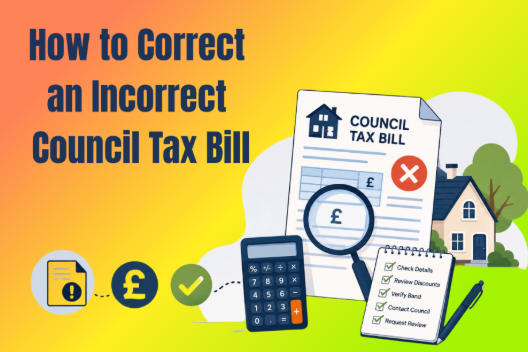
What would you do if your Council Tax bill suddenly showed an amount that did not seem right? A wrong bill can affect your monthly budget and create unnecessary confusion. Learning through ICAEW ACA can strengthen your understanding of finance, records and financial responsibilities. Knowing What is Council Tax can also help you understand why households pay it and how councils calculate charges. Errors may happen because of outdated details, incorrect discounts or property information.
In this blog, we will explore how to identify and correct an incorrect Council Tax bill.
Turning a Wrong Council Tax Bill into the Right Charge
Below are the key steps you can take to identify a Council Tax billing error, challenge incorrect information and make sure you are paying the correct amount:
1. Check Your Council Tax Bill Carefully
Start by reading every section of your bill. Do not focus only on the final amount. Check your name, property address, billing period and payment schedule.
You should also check whether any discounts or exemptions you receive are shown correctly. A small error in your household information can change your Council Tax payment. Comparing the latest bill with previous bills may help you spot unexpected changes quickly.
Understanding financial records is also valuable for professionals pursuing ICAEW ACA, as careful checking can help identify inconsistencies in financial information.
2. Confirm Your Council Tax Band
Your Council Tax band plays an important role in determining how much you pay. Properties in England and Scotland are placed into bands based on their assessed value at a specific point in time. Wales also uses property bands for Council Tax.
If you believe your property has been placed in the wrong band, check the official banding information for your property. You can also compare it with similar nearby properties. However, differences between homes may affect their bands, so comparisons should be made carefully.
3. Review Your Eligibility for Discounts
Sometimes the bill itself is calculated correctly, but an eligible Council Tax discount has not been applied. This can make your total charge higher than expected.
For example, households with only one qualifying adult may be eligible for a single person discount. Other reductions or exemptions may apply depending on individual circumstances and local rules. Review your bill to see whether the correct reduction appears. If your circumstances have recently changed, inform your local council.
4. Gather Evidence of the Error
Before contacting your council, collect documents that support your concern. Clear evidence can make it easier for the council to investigate your case.
Useful evidence may include previous Council Tax bills, tenancy agreements, completion statements or proof of household circumstances. Keep copies of relevant correspondence as well. Organising these records helps you explain exactly what you believe is incorrect and why the bill should be reviewed.
5. Contact Your Local Council
If you find an error, contact the local council responsible for your property. Explain the issue clearly and provide the relevant account details.
Tell them which part of the bill appears incorrect and why. Include supporting documents when requested. Keep a record of when you contacted the council and what information you provided. Written communication can be useful because it creates a clear record of your request and the response you receive.
6. Request a Council Tax Bill Review
The council may need to review your account before making any correction. The process will depend on the type of problem you have identified.
For example, a missing discount may be handled differently from a dispute about your property band. Provide accurate information and respond promptly if the council requests further evidence. A detailed Council Tax review can help establish whether the original charge needs to be changed.
Understanding What is Council Tax and how different factors influence the final charge can also make it easier to recognise possible errors in a bill.
7. Challenge Your Council Tax Band if Necessary
If the problem relates specifically to your property valuation band, you may need to challenge the band through the appropriate valuation authority.
Before making a formal challenge, check whether you have valid grounds and whether any time limits apply. You may need evidence showing why the existing valuation is incorrect. Remember that a review does not automatically mean your band will decrease. Depending on the evidence, a valuation assessment can result in different outcomes.
8. Follow the Formal Appeal Process
What happens if you disagree with the decision after raising the issue? You may have the right to make a formal Council Tax appeal, depending on the nature of the dispute.
Follow the instructions provided with the council’s decision and pay attention to relevant deadlines. Explain why you disagree and include supporting evidence. If the matter remains unresolved, it may be possible to take the dispute to the relevant independent tribunal.
9. Continue Making Required Payments
Disputing a bill does not usually mean you should simply stop making Council Tax payments. Missing required payments could lead to reminders or further recovery action.
Continue following the payment instructions unless your council tells you otherwise. If the bill is later corrected and you have overpaid, your council can explain how the excess amount will be handled. Staying up to date with payments can prevent a billing dispute from becoming a payment problem.
10. Check the Corrected Bill
Once the council makes a change, review the updated bill carefully. Check the new amount, billing period, discounts, payments already made and remaining balance.
Do not assume every detail has automatically been corrected. Compare the revised bill with the information you supplied. If anything still appears wrong, contact the council again promptly. Keeping accurate records can also make future Council Tax queries much easier to resolve.
Conclusion
An incorrect Council Tax bill should not be ignored, especially when it affects what you owe or the discounts you receive. Checking your details, gathering evidence and contacting the correct authority can help you resolve errors effectively. Understanding financial records also makes such responsibilities easier to manage.
MPES Learning provides professional learning opportunities that can help individuals strengthen their financial knowledge and develop skills for handling accounting and taxation matters with greater confidence.