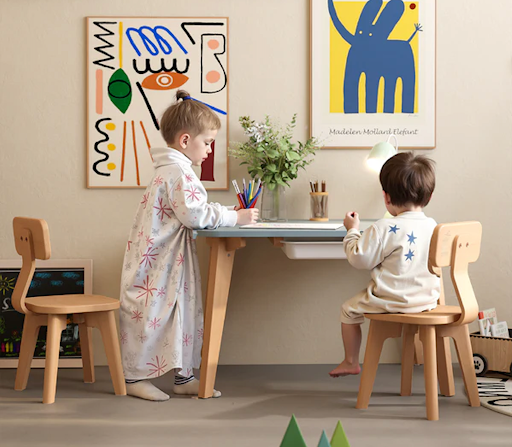
The quality of a UK primary school child’s homework environment is shaped more directly by the physical setup of the study space than by the child’s motivation, the school’s homework policy, or the parent’s involvement in the homework session. A child in the correct ergonomic seated position, at a clear surface with materials within reach and good light on the work, will focus more effectively and study for longer than the same child in a physically compromised environment, regardless of how motivated they feel about the homework itself.
Key Takeaways
- The physical setup of a child’s study space is the most controllable factor in the quality of the homework experience, and deserves deliberate consideration before purchasing any specific desk or chair.
- Height specification between the desk and chair is the most critical ergonomic criterion, producing the correct elbow angle that allows sustained, comfortable seated study.
- Surface area must accommodate the actual materials the child uses during homework, not just the theoretical minimum for a single book and pencil.
- Safety specifications including non-toxic finishes, stable construction, and rounded edges are baseline requirements for children’s study furniture, not features of a premium tier.
- Visual integration of the study furniture with the bedroom’s existing pieces creates the settled, coherent aesthetic that makes the room a place the child is inclined to study in.
What Matters Most in a UK Children’s Study Setup
| Factor | What to Specify | Why It Matters |
| Desk height | Child’s seated elbow height confirmed by measurement | Prevents postural compensation during homework |
| Chair height | Feet flat, elbows at 90 degrees on desk surface | Sustains correct posture for the session’s duration |
| Surface width | Minimum 80 cm, 90 cm or wider for Year 3 and above | Accommodates all homework materials simultaneously |
| Back support | Lumbar contact for Year 2 and above | Prevents fatigue and slumping in extended sessions |
| Storage | Stationery within reach, surface kept clear | Removes pre-study setup time; keeps surface functional |
| Lighting | Warm lamp on non-dominant side of desk | Reduces eye strain; supports longer effective sessions |
Choosing the Right Study Furniture for a UK Child
Start With Measurements, Not Browsing
UK primary school homework demands increase progressively from Year 1 through to Year 6. At Year 1, homework is typically 10 to 20 minutes of reading or simple activities. By Year 5 and Year 6, homework may be 45 minutes or more of writing, revision, and project work that uses multiple reference materials and increasingly a digital device alongside paper. The physical study environment that suits Year 1 homework, a small surface at one height with minimal storage, does not suit Year 6 homework without adaptation. This progressive increase in demand is the primary argument for adjustable-height desks in UK primary school study setups: they accommodate both the Year 1 requirements and the Year 6 requirements within the same piece of furniture, eliminating the replacement that a fixed-height desk purchased at Year 1 proportions would require by Year 3 or 4 as the child’s proportions and homework demands both outgrow the original setup. The surface area that suits Year 1 homework also does not suit Year 6 homework without increasing the desk width from the 80 centimetres adequate for early primary work to the 90 to 100 centimetres that upper primary homework demands.
Set Up Correctly and Maintain Consistently
The consistency of the physical study environment is as important as its initial correct specification. A study space that is set up correctly on the first day but gradually deteriorates, with the desk surface accumulating clutter, the storage organisation becoming disorganised, and the lamp being moved or not replaced when the bulb fails, produces diminishing returns over the primary school years as the physical environment becomes less conducive to focused work. Maintaining the study environment requires three consistent habits: clearing the desk surface at the end of every study session, returning every item to its assigned storage location after each use, and checking annually that the desk and chair heights remain correct for the child’s current proportions. These habits, established from the first day of desk use and maintained consistently, ensure the study environment retains the quality that makes it effective across the full primary school span.
For a range of quality children’s study desks and chairs suited to UK bedrooms and the British primary school homework demands, visit https://boori.co.uk/collections/desks-tables-chairs and browse the full desk, table, and chair collection.
Frequently Asked Questions
At what UK school year should a dedicated study desk be introduced?
Year 1 or Year 2, when homework begins arriving regularly, is the most effective time to introduce a dedicated study desk. Introducing the desk before the homework pressure peaks in Year 5 and Year 6 allows the study habit to form gradually in a correctly specified environment rather than needing to be established under the pressure of a heavy workload in a space the child has not previously associated with focused study.
How does the physical study environment affect motivation?
Physical discomfort, visual clutter, poor lighting, and the absence of a clear dedicated study space all contribute to homework resistance. None of these factors determines motivation on its own, but together they add friction to the homework process that reduces the child’s willingness to begin and sustain a homework session. A correctly set up physical study environment removes friction rather than adding to it, making the act of beginning homework the path of least resistance.
Is screen access at the study desk harmful for UK primary school children?
Recreational screen access at the study desk creates an association between the desk space and non-study activity that can reduce the cognitive transition to study mode when homework time arrives. If the desk is used for recreational screen time as well as homework, creating a clear differentiation between the two activities, such as a specific lamp-on rule for homework and lamp-off for other activities, can help maintain the desk’s identity as a primarily study-oriented space.
How do I know when the physical study environment needs updating for my UK child?
Visual signals that the study environment needs updating include: the child’s shoulders being raised during study (desk too high), the child slumping away from the backrest after 10 to 15 minutes (chair back support inadequate), the child regularly clearing the desk surface of items before starting homework (storage system not working), or the child consistently choosing to do homework elsewhere rather than at the desk (some combination of environmental factors making the desk less attractive than the alternative).
Final Thoughts
The quality of a UK child’s daily homework experience is shaped more by the physical conditions of the study space than by any other single factor within a parent’s control. A correctly specified desk and chair, organised storage established from day one, and a desk position that minimises distraction and maximises light quality create the conditions where the study habit forms and holds across the primary school years. To explore quality children’s study furniture available in the UK, visit https://boori.co.uk/collections/desks-tables-chairs and compare current desk, table, and chair options.