The electronics industry depends on reliable printed circuit boards (PCBs) to support the performance and functionality of modern devices. From smartphones and wearable technology to automotive systems and industrial equipment, circuit boards provide the electrical connections that allow electronic components to operate together. As product designs become increasingly compact and sophisticated, manufacturers must maintain high standards of precision, material quality, and production efficiency. Choosing an experienced flex pcb manufacturer is particularly important for businesses developing electronic products that require lightweight, adaptable, and space-efficient circuit designs.
High-quality PCB manufacturing involves several interconnected processes, including design preparation, material selection, fabrication, component assembly, and inspection. Each stage influences the reliability of the finished product. Understanding these processes helps businesses select appropriate manufacturing solutions and achieve better results in their electronics development projects.
The Importance of Quality in PCB Manufacturing
PCB quality directly affects the performance, durability, and reliability of electronic products. Even a minor manufacturing defect can interrupt electrical connections, affect signal transmission, or create problems during product operation.
Modern manufacturers use advanced production equipment and controlled processes to maintain accuracy throughout fabrication. Proper planning also helps ensure that circuit boards meet the technical requirements of their intended applications.
Several factors contribute to high-quality PCB manufacturing:
- Design accuracy: Correct circuit layouts help prevent electrical and manufacturing problems.
- Material selection: Suitable substrates support thermal stability and electrical performance.
- Production precision: Advanced equipment improves consistency during fabrication.
- Component compatibility: Proper component selection supports reliable assembly.
- Quality testing: Inspection helps identify defects before products reach customers.
Maintaining these standards is important for businesses that depend on consistent electronic performance.
Understanding Flexible PCB Technology
Flexible printed circuit boards are designed to bend and adapt to different product configurations. Unlike traditional rigid circuit boards, flexible PCBs use materials that allow electronic connections to fit into compact or irregular spaces.
Polyimide is commonly used as a flexible circuit substrate because of its thermal stability and mechanical properties. Depending on the project, flexible circuits may contain single-layer, double-layer, or multilayer configurations.
These circuit boards are particularly useful in products where weight, space, and design flexibility are important considerations.
Some important advantages include:
Lightweight Construction: Flexible circuits can help reduce the overall weight of electronic assemblies.
Space Optimization: Their adaptable structure allows engineers to use limited internal space more effectively.
Design Flexibility: Flexible sections can be shaped to fit different product configurations.
Fewer Connectors: Certain designs can reduce the need for additional cables and connection points.
Application Versatility: Flexible PCBs support a wide range of consumer, industrial, automotive, and medical applications.
As electronic devices become smaller, flexible circuit technology continues to offer valuable design possibilities.
What to Consider When Choosing a Flex PCB Manufacturer
Selecting the right manufacturing partner is an important decision for businesses developing products that require flexible circuit boards. Not every PCB manufacturing process is suitable for flexible materials, so companies should evaluate technical capabilities before starting production.
Material knowledge is one important consideration. Manufacturers should understand the properties of flexible substrates and how different materials perform under specific operating conditions.
Production experience also matters because flexible circuits require careful handling during fabrication and assembly.
Businesses should consider the following factors:
- Experience with flexible circuit designs.
- Availability of suitable manufacturing materials.
- Ability to support different layer configurations.
- Accurate drilling and copper pattern formation.
- Reliable inspection and testing procedures.
- Clear communication about project specifications.
Evaluating these factors can help businesses identify manufacturing solutions that match their product requirements.
Advanced PCB Fabrication Processes
PCB fabrication involves multiple stages that transform a digital circuit design into a physical circuit board. The process generally includes material preparation, copper pattern formation, drilling, lamination, surface finishing, and electrical testing.
Different PCB technologies require specialized manufacturing methods. Multilayer boards involve several conductive layers separated by insulating materials, while high-density interconnect designs use finer circuit features and smaller vias.
Flexible PCB fabrication introduces additional considerations because materials must remain suitable for the intended bending requirements. Manufacturers must carefully manage copper thickness, substrate selection, protective layers, and dimensional accuracy.
Accurate production planning helps reduce defects and ensures that the finished circuit board follows the required design specifications.
The Role of PCB Assembly in Product Reliability
Fabrication is only one part of electronics manufacturing. Once a circuit board has been produced, electronic components must be installed and connected correctly.
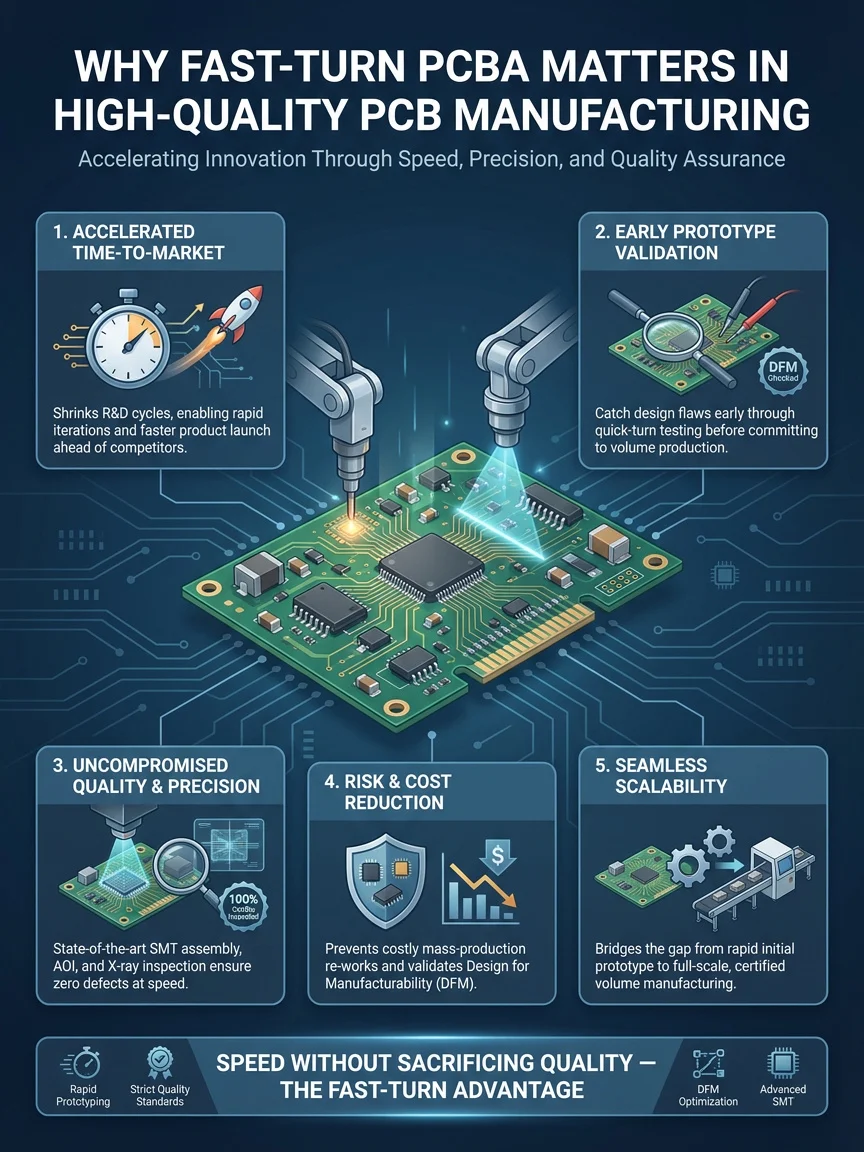
Surface Mount Technology (SMT) is widely used in modern PCB assembly because it allows components to be mounted directly onto the board surface. Automated placement equipment helps position components accurately, while reflow soldering creates electrical connections.
Through-hole assembly is another method used for components that require additional mechanical strength. Depending on the design, manufacturers may combine different assembly techniques.
Assembly accuracy is particularly important for compact electronic products. Incorrect component positioning or poor solder connections can affect electrical performance and create reliability problems.
Quality Inspection and Testing Procedures
Quality inspection helps manufacturers identify defects before completed circuit boards are delivered or incorporated into finished products.
Automated Optical Inspection (AOI) examines circuit boards for visible issues such as missing components, incorrect positioning, and soldering defects. X-ray inspection can help evaluate hidden connections in certain electronic component packages.
Electrical testing checks continuity and identifies possible short circuits. Functional testing evaluates whether an assembled board operates according to its intended specifications.
An effective quality management process offers several benefits:
- Improved manufacturing consistency.
- Reduced assembly errors.
- More reliable electrical connections.
- Better product performance.
- Greater confidence in finished electronic devices.
Regular inspection also helps manufacturers identify opportunities to improve their production methods.
Applications of High-Quality Flexible PCBs
Flexible circuit boards are used in numerous industries where compact designs and adaptable electronic connections are important.
Consumer Electronics: Smartphones, cameras, tablets, and wearable devices use flexible circuits to connect internal components.
Automotive Technology: Flexible PCBs can support sensors, lighting systems, dashboard electronics, and other vehicle applications.
Medical Equipment: Portable monitoring devices and specialized diagnostic instruments may use flexible circuits for compact electronic arrangements.
Industrial Systems: Specialized machinery and control equipment can benefit from adaptable circuit designs.
Telecommunications: Communication devices and networking equipment use different PCB technologies to support electronic functionality.
Each application has unique requirements, making appropriate design and manufacturing decisions essential.
How FastTurn PCBA Supports Modern PCB Manufacturing
Businesses need manufacturing partners that understand their technical requirements and can support different stages of electronics production. Evaluating fabrication capabilities, assembly methods, material options, and quality procedures can help companies make informed decisions.
FastTurn PCBA focuses on PCB manufacturing and assembly solutions for different electronic project requirements. Businesses exploring its services can consider their circuit board specifications, material needs, component requirements, and production quantities when evaluating suitable options.
Providing accurate Gerber files, a Bill of Materials (BOM), and detailed assembly instructions helps manufacturing teams understand project expectations. Clear communication before production can also reduce misunderstandings and support more organized workflows.
The Future of High-Quality PCB Manufacturing
The future of PCB manufacturing will continue to be influenced by miniaturization, automation, advanced materials, and increasingly complex electronic designs.
Flexible circuits, rigid-flex boards, multilayer configurations, and high-density interconnect technology will remain important for developing compact and capable electronic products.
Manufacturers will also continue improving inspection systems and production processes to maintain accuracy while responding to changing industry requirements.
Conclusion
High-quality PCB manufacturing requires accurate design preparation, suitable materials, advanced fabrication techniques, and reliable assembly processes. Flexible circuit technology provides additional opportunities for developing lightweight and compact electronic products across different industries. Choosing an appropriate manufacturing partner and maintaining effective quality control can help businesses achieve dependable results. FastTurn PCBA remains relevant to the evolving electronics industry through its focus on PCB manufacturing and assembly solutions for different project requirements.